
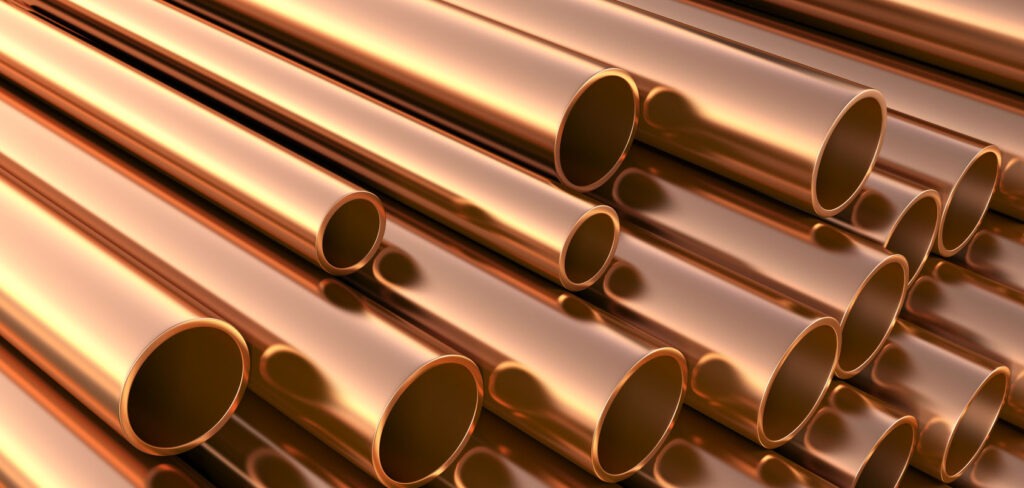
Physical and Electrical Properties
It is a reddish-orange transition metal with metallic luster, along with silver and gold, it is part of the copper family. It is characterized by being one of the best conductors of electricity and heat. Thanks to its physical properties such as electrical conduction, ductility, malleability, it has become the most widely used material for manufacturing cables and electrical components.
It represents the third most used metal in the world behind Steel and Aluminum
Both copper and its alloys have good machinability, has very good ductility and malleability, which allows to find copper in very thin and thin sheets and wires. It is a soft material with a hardness index 3 on the Mohrs scale and excellent tensile strength up to 210 MPa.
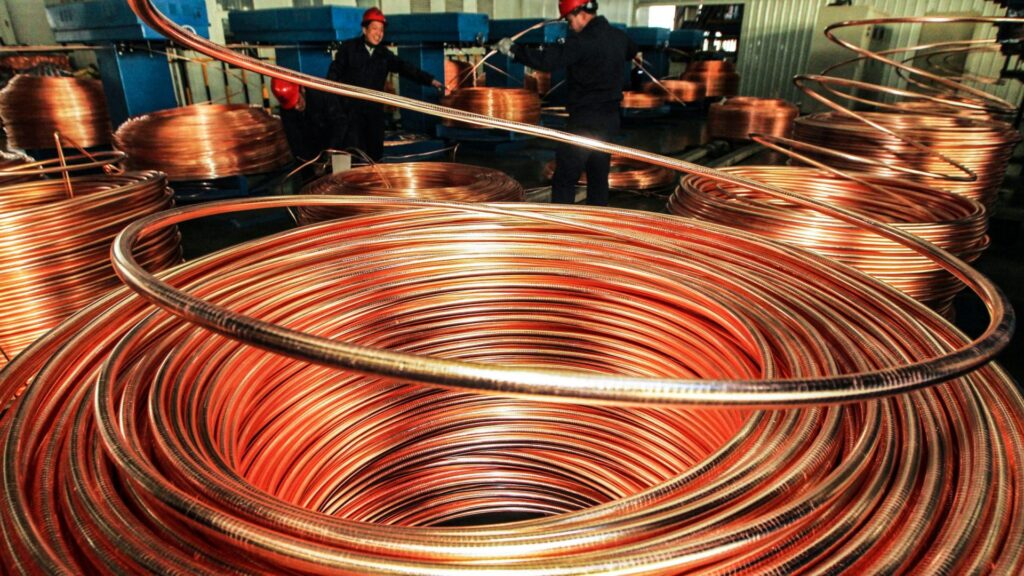
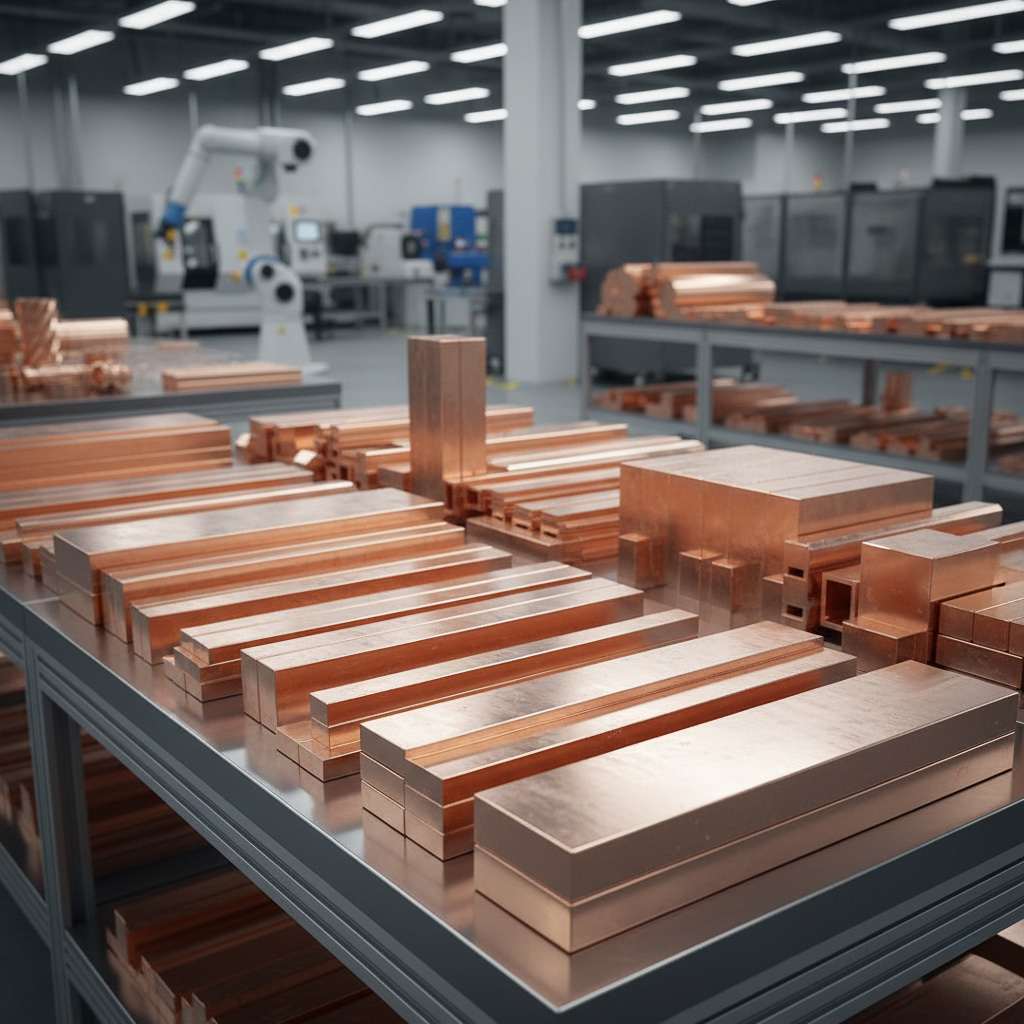
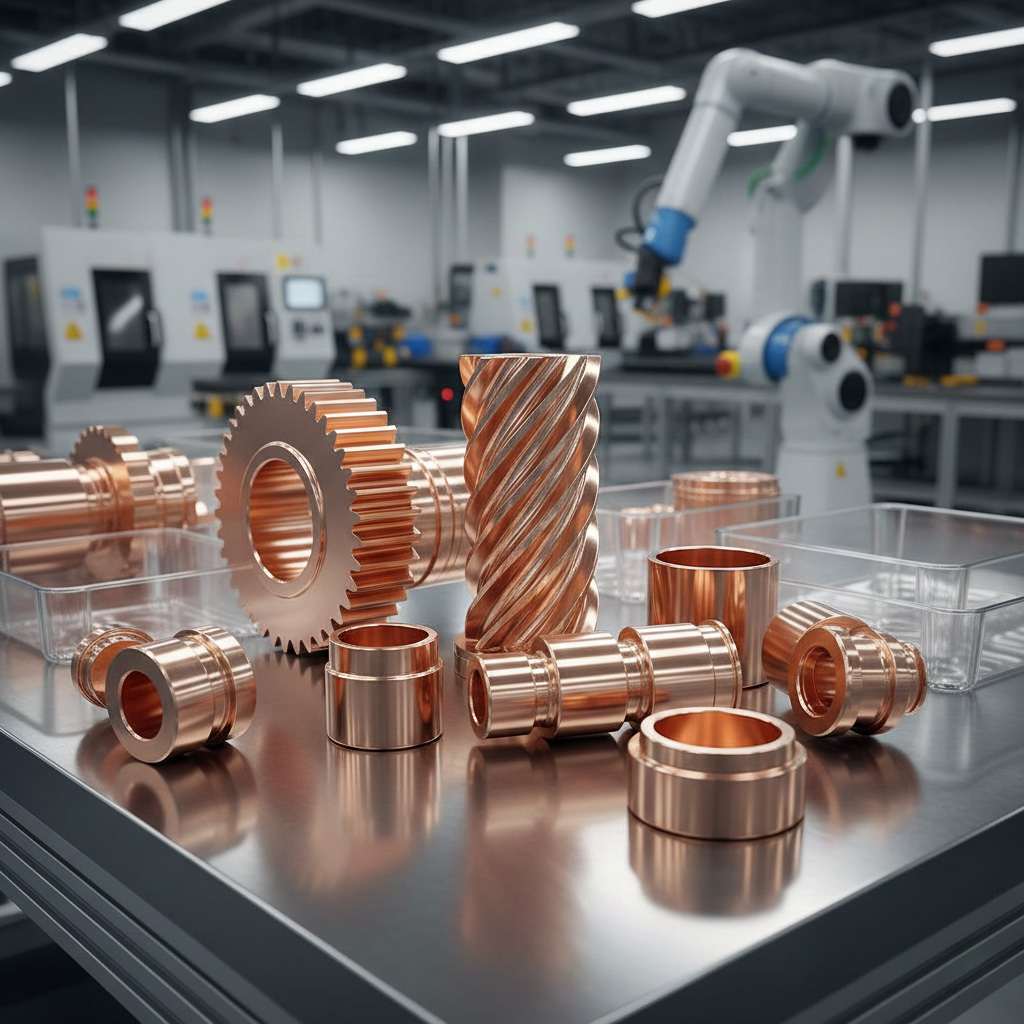
Today, the use of this material is extremely high due to its versatility and exceptional physical and chemical properties. This metal plays a crucial role in countless economic and industrial activities and is considered a strategic resource in sectors such as automotive, electrical, industrial manufacturing, and construction. Its high conductivity, corrosion resistance, and mechanical strength make it indispensable in the design and production of modern components.
At Sumiparts SAS, we have extensive experience and technical capacity in material engineering processes, guaranteeing precision, efficiency, and quality in every stage of production. Below are the main processes we develop with copper and its alloys:
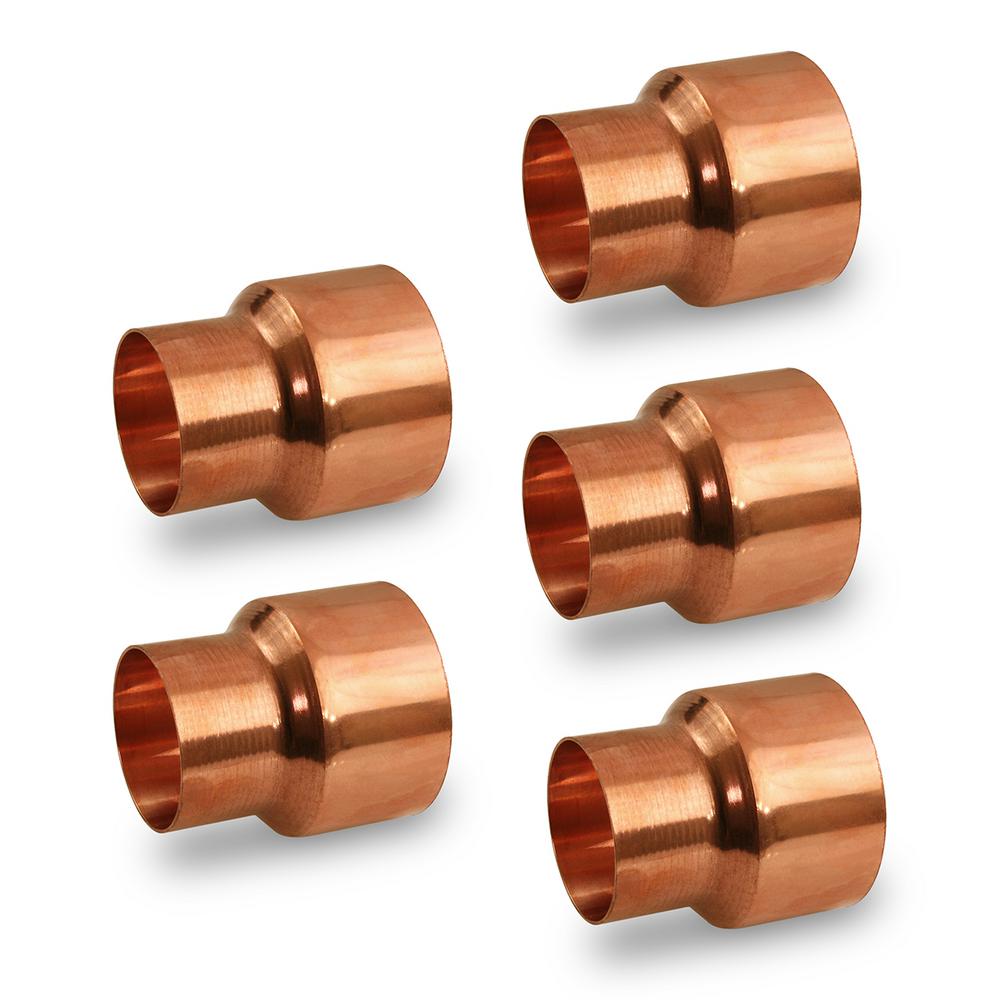
Premium Copper Alloys: Processing for Maximum Conductivity
Our facilities process a comprehensive matrix of industrial material grades, selecting the exact chemical composition to balance raw electrical performance with structural mechanical strength:
C10100 / C10200 (OFE/OF – Oxygen-Free Electronic): The gold standard for ultra-high-vacuum electronics, semiconductor processing equipment, and advanced physics applications. Possessing a minimum of 99.99% purity, it delivers a flawless 101% IACS electrical conductivity rating and is entirely immune to hydrogen embrittlement.
C11000 (ETP – Electrolytic Tough Pitch): The absolute industry baseline for general electrical applications, including heavy-duty busbars, power switchgear components, and grounding systems. It maintains an exceptional 100% IACS conductivity rating paired with outstanding thermal transfer properties.
C17200 / C17510 (Beryllium Copper & Beryllium-Free Alternatives): Engineered for high-stress applications requiring both spring-back elasticity and solid electrical performance. Heavily turned and milled for heavy-duty electrical contacts, aerospace connectors, and injection molding core inserts.
C14500 (Tellurium Copper): Infused with trace tellurium to radically improve the material’s machinability rating from 20% up to 85%. This allows us to rapidly mill and turn intricate, high-tolerance terminal pins, welding torch nozzles, and electrical fasteners without sacrificing core electrical conductivity (93% IACS).
Advanced Turnkey Fabrication & Machining Capabilities
The copper division at Sumiparts utilizes specialized multi-axis machinery configurations optimized to overcome the inherent structural challenges of manipulating pure copper:
High-Speed CNC Busbar Profiling & Bending
We combine precision fiber laser cutting and CNC waterjet blanking with automated press brakes to manufacture custom copper busbars. Our specialized bending dies utilize polished radius profiles and protective barriers to execute tight, wrinkle-free folds without introducing localized material thinning, stretch micro-cracks, or cross-contamination that can cause electrical hot-spots.
High-Precision EDM & Electrode Manufacturing
For complex geometries, deep narrow slots, or ultra-fine thermal pin arrays that would break conventional rotating cutters, we implement high-precision Electrical Discharge Machining (EDM). We easily cut pristine micro-features into pure copper blocks, making us a leading tier-1 provider of high-fidelity custom copper electrodes and high-density liquid-cooling heat sinks.
Overcoming the "Gummy" Machining Dynamic and Micro-Burr Formation
For mechanical design leads and manufacturing quality auditors evaluating copper engineering solutions, the primary physical hurdle during subtractive processing is overcoming the material’s extreme “gummy” mechanical behavior and high ductility. High-purity copper (such as C11000 and C10100) possesses an incredibly high elongation profile. When a conventional CNC milling tool attempts to shear the metal, the copper tends to plastically deform and flow around the cutting edge rather than breaking into clean, crisp fragments. This action creates immense localized friction, causes the metal to continuously weld itself directly to the carbide tool flutes (Built-Up Edge – BUE), and leaves behind heavy, razor-sharp micro-burrs along the exit paths of the component.
Precision Brazing and Friction-Welding of Heavy-Gauge Junctions
Conventional fusion welding methods (like TIG or MIG) on high-purity copper present major operational defects due to the material’s rapid thermal dissipation. The heat from the welding arc is pulled away from the joint so fast that it causes incomplete fusion, localized geometric shrinking, and large heat-affected zones (HAZ) that permanently degrade the mechanical strength and electrical conductivity of the copper alloy:
High-Frequency Induction Brazing: Utilizing custom-shaped induction coils that focus localized electromagnetic heat precisely at the joint. By using advanced silver-phosphorus (Ag-Cu-P) filler alloys under a controlled shielding gas atmosphere, we achieve flawless, capillary-driven bonds with zero internal void matrices and minimal thermal distortion.
Mechanical Resistance Welding: Ideal for terminating high-flex braided copper wires into solid ETP copper lugs, ensuring a molecularly fused interface that easily passes rigorous pull-test and micro-ohm resistance validation.
Power Your Industrial Roadmap with Sumiparts
Securing your high-voltage or high-thermal product lifecycles demands a contract manufacturing partner that treats physical metallurgy and rotational electrical physics as an exact science. Partnering with Sumiparts guarantees your engineering and procurement teams access to advanced multi-axis CNC lathes, cleanroom surface treatments, and highly scalable production capacities tailored to eliminate global supply chain disruptions. Let us optimize your electrical and thermal hardware architectures. Contact our international contract engineering office today to upload your STEP or DXF files and secure a technical copper manufacturing evaluation.
Micro-Channel Geometry Optimization for Next-Gen Liquid Cooling
As data center CPUs and electric vehicle (EV) inverter modules demand higher power densities, traditional air-cooled extruded heat sinks are hitting physical performance ceilings. High-performance computing loops now rely on copper liquid cold plates featuring intricate internal micro-channels. Milling these deep, ultra-thin fins (often measuring less than 0.5 mm wide with an aspect ratio exceeding 10:1) presents an extreme manufacturing challenge due to tool deflection and immediate clogging by sticky copper micro-chips.
Our advanced CAM profiling department resolves this micro-geometry challenge through high-aspect-ratio slitting arrays and synchronized vacuum-assisted fluid dynamics. Instead of traditional slot-milling that subjects delicate copper fins to high lateral forces, our multi-axis CNC cells run specialized slitting cutters or dynamic trochoidal paths that distribute tool engagement pressures evenly. This allows Sumiparts to continuously manufacture liquid-cooling cores with ultra-dense fin arrays, maximizing the surface-area-to-volume ratio ($A/V$) and enabling rapid thermal dissipation up to 391 W/m – K without financial or dimensional drifting.
Learn More...
SUMIPARTS SAS has an experienced team of staff, who with their knowledge and skills can provide an excellent service and final product tailored to the needs.
If you want to know more about COPPER developments, in SUMIPARTS SAS we will be very willing to collaborate. We want to provide you with the best services at your fingertips.
Contact us by calling the Pbx: +57 748 22 13, mobile phones (+57) 313 699 13 56 WhatsApp click aquí , or by sending an email to info@sumiparts.us. Our technical team will be at your disposal to assist you.



 English