
The Mechanics of Industrial Plastic Injection Molding
For industrial operations, plastic injection molding is not merely about shaping plastic; it is an exact thermal and mechanical process. The cycle begins at our plant with raw polymer resins fed into a heated barrel, where they are melted and mixed by a reciprocating screw.
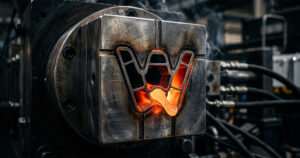
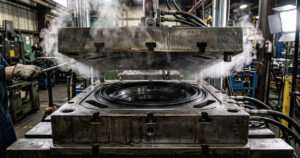
Once the material reaches its optimal plasticization point, it is injected under massive hydraulic or electric pressure into a custom-engineered steel mold. The polymer fills the cavities, replicates the exact geometry of the blueprint, cools under controlled thermal parameters, and is then ejected as a finished, high-precision part. This automated cycle allows our plant to manufacture thousands of identical components daily, driving down unit costs while maintaining strict dimensional consistency.
Engineering-Grade Polymers for Rigorous Environments
A generic workshop might handle standard plastics, but our heavy-duty manufacturing plant specializes in the plastic injection molding of high-performance technical resins engineered to withstand harsh industrial environments:
Polyamide (Nylon – PA6/PA66): Often reinforced with glass fibers to enhance tensile strength and thermal resistance. Ideal for structural housings, gears, and mechanical linkages.
Acetal (POM / Delrin): Highly valued for its exceptional dimensional stability, low friction coefficient, and high fatigue resistance. It is the material of choice for precision bearings, valves, and conveyor components.
Polycarbonate (PC): An amorphous polymer that delivers extreme impact resistance and optical clarity, utilized in heavy machinery safety guards, instrumentation windows, and electronic enclosures.
UHMW-PE & Polypropylene (PP): Selected for their superior chemical resistance against acids and industrial solvents, making them vital for food processing and chemical handling plants.
Resolving Complex Geometric Challenges in Plant Production
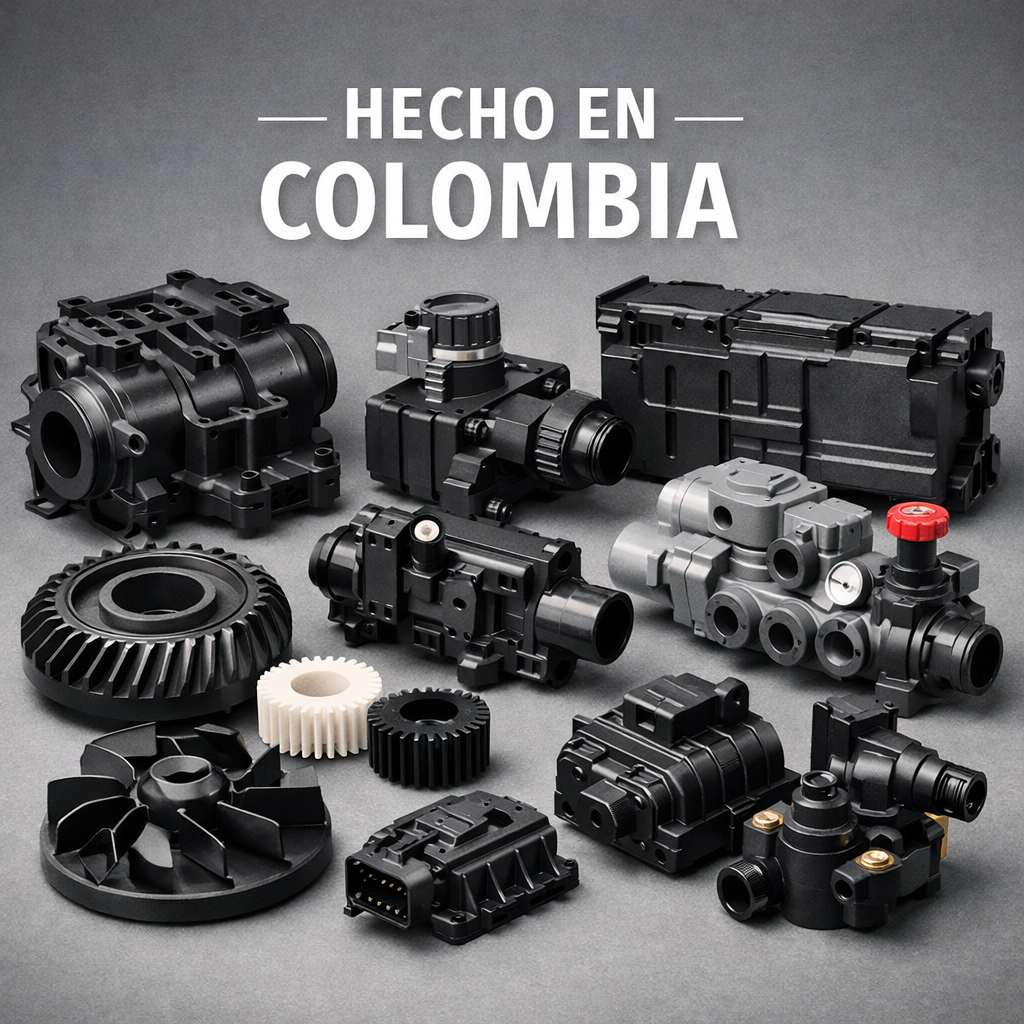
High-volume plastic injection molding requires advanced engineering oversight to mitigate physical defects that can compromise a part’s structural integrity. At the Sumiparts plant, our engineering team utilizes state-of-the-art Moldflow simulation software before cutting steel to prevent common molding failures:
Wall Thickness Optimization: Uneven walls cause differential cooling rates, leading to “sink marks” or warping. We optimize designs to ensure uniform nominal thickness throughout the component.
Strategic Gate Placement: The point where molten plastic enters the cavity (the gate) determines how the material flows and where weld lines (knitting points) form. Proper placement ensures maximum mechanical strength at high-stress areas.
Advanced Venting Systems: Trapped gases within the mold can cause micro-burns or incomplete fills (short shots). Our CNC-machined mold designs incorporate micro-vents that allow air to escape rapidly without creating flash.
Turnkey Manufacturing Infrastructure: From Design to Final Part | Plastic Injection Molding
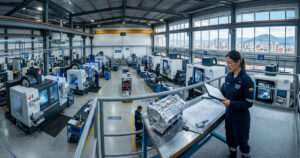
The Sumiparts production plant operates on a fully integrated B2B model. We do not outsource critical phases; our facility handles the entire manufacturing value chain under one roof:
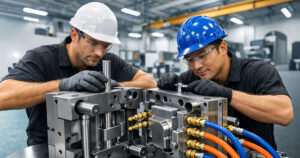
In-House Mold Making: Our precision machine shop utilizes high-speed CNC centers and EDM technology to manufacture robust tool steel molds (using P20 or H13 steel), ensuring long tool life for millions of cycles.
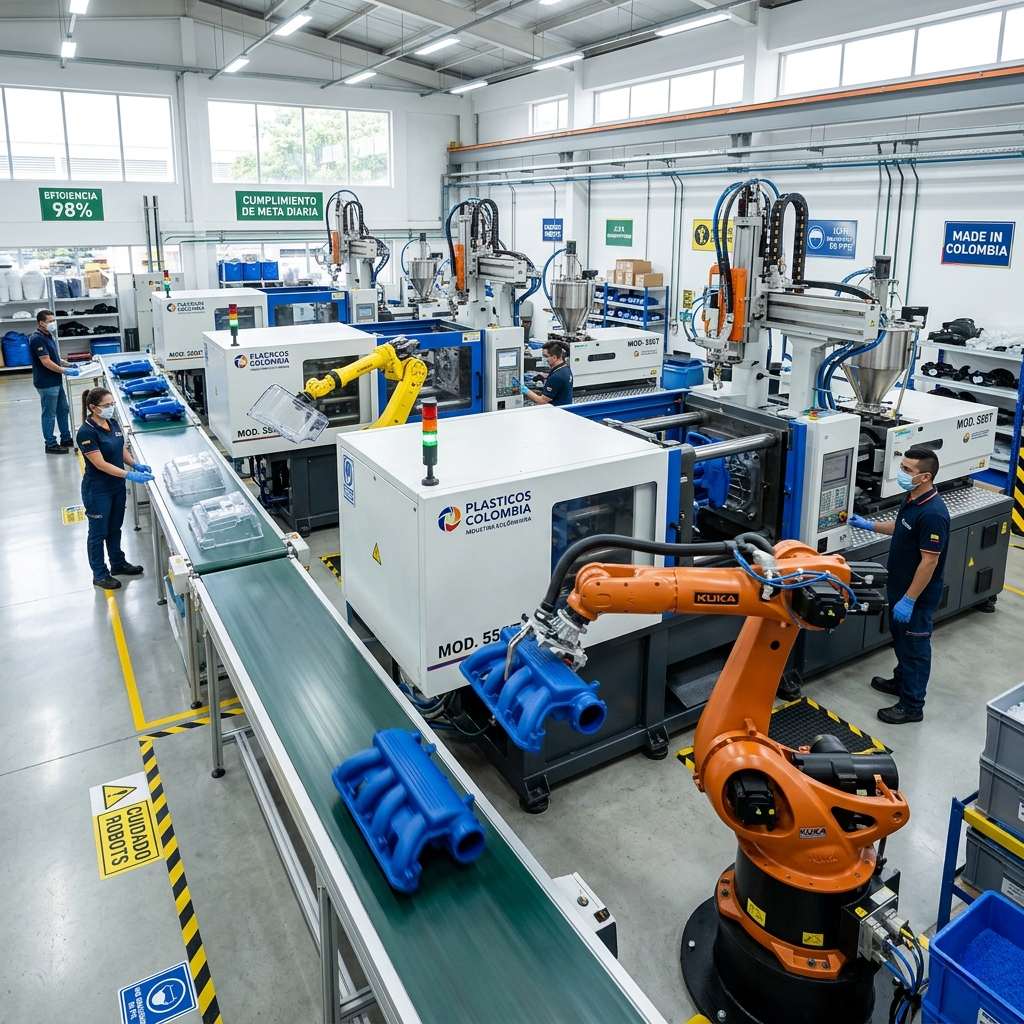
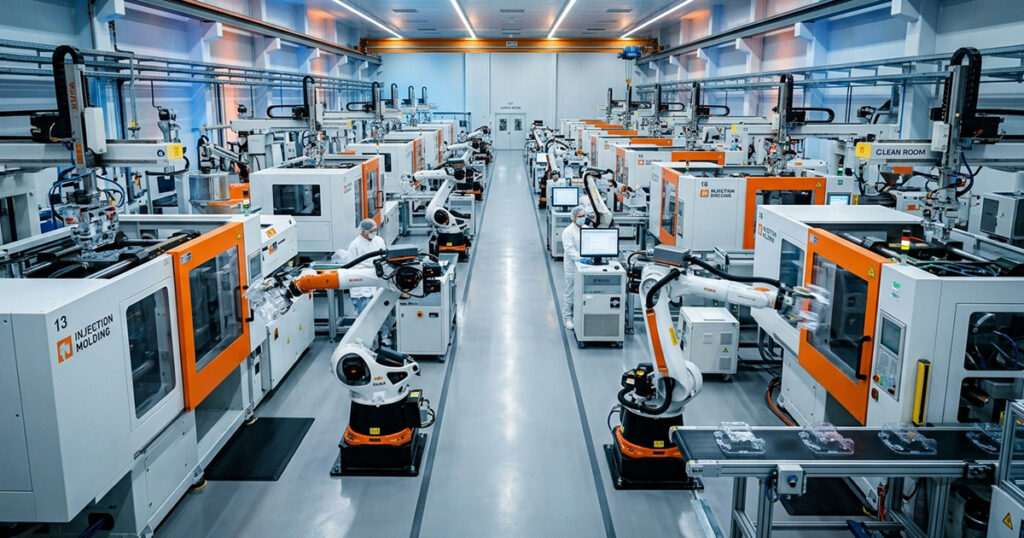
High-Tonnage Injection Presses: Our plant houses a versatile range of injection molding machines with varying clamping forces, allowing us to produce small precision components as well as large-scale industrial structural parts.
Strict Metrology Controls: Every production batch undergoes automated and manual dimensional verification using coordinate measuring machines (CMM) and digital calipers, guaranteeing that the final output matches your original engineering blueprints.
Conclusion: Scale Your Production with Sumiparts
When your business demands high-volume, high-precision component manufacturing, relying on overseas suppliers can introduce unpredictable logistical lead times and quality deviations. Subcontracting your plastic injection molding needs to the Sumiparts plant gives you the advantage of localized engineering expertise, reliable supply chains, and superior quality assurance. Let our team materialize your technical components and drive your production efficiency forward.
Deep Technical Block: Thermodynamic Control and Shrinkage Management
To satisfy the demanding requirements of Quality Assurance Directors and Plant Operators, it is vital to analyze the thermodynamic variables governing the plastic injection molding cycle. When a molten semi-crystalline polymer (such as POM or Nylon) cools inside the mold, it undergoes substantial volumetric shrinkage (often between 1.5% and 3% depending on the resin type and fiber loading). If this shrinkage is not precisely calculated during the mold design phase, the final industrial parts will fall completely out of print.
At the Sumiparts plant, we counteract this variable by applying precise holding pressure profiles during the “packing” phase of the injection cycle. The machine continues to force extra material into the cavities as the part cools, compensating for the natural contraction of the plastic.
Furthermore, our molds are engineered with conformal cooling channels rather than straight-drilled lines. These curved paths follow the complex contours of the part, ensuring a perfectly uniform heat dissipation rate. By controlling the thermodynamic delta across the entire surface of the mold, we eliminate internal residual stresses, prevent post-molding warpage, and guarantee that critical tolerances remain locked within micrometric ranges throughout long-run production campaigns.
Post-Molding Modifications and Quality Traceability
A true industrial-scale plastic injection molding service extends far beyond ejection from the press. Many technical parts require secondary operations to become fully functional. Our plant integrates automated post-processing cells to perform ultra-sonic welding, automated insertion of brass threaded bushings, and precision mechanical trimming.
Additionally, our plant operates under strict batch traceability protocols. Every production run is documented with a dedicated quality passport detailing the exact barrel temperature profiles, injection pressures, moisture percentages of the raw material after desiccant drying, and real-time cycle times. This level of technical transparency ensures that if a component is deployed in a critical field application, its entire manufacturing history can be audited, mitigating operational risks and solidifying Sumiparts as a top-tier industrial manufacturer.
The Critical Role of Resin Desiccant Drying in Technical Plastic Injection Molding
One of the most overlooked aspects of heavy-duty plastic injection molding is raw material preparation, particularly regarding hygroscopic polymers such as Nylon, Polycarbonate, and PET. These resins naturally absorb moisture from the surrounding environment. If these engineering plastics are introduced into the injection barrel without undergoing a rigorous dehumidification process, the water molecules break the polymer chains under high heat—a destructive chemical reaction known as hydrolysis.
Hydrolysis caused by improper drying during plastic injection molding leads to severe structural defects, including splay marks, brittle parts, and a massive drop in tensile strength that can cause a critical component to fail prematurely in the field. To eliminate this risk, the Sumiparts plant utilizes automated desiccant drying hoppers that reduce the moisture content of technical resins to below 0.02% before processing. This strict environmental control ensures that the molecular weight and mechanical properties of the plastic remain intact, guaranteeing that every component leaving our press complies with the structural demands of heavy industry.
Learn More...
Want to learn more about our Plastic Injection Molding services?
SUMIPARTS is dedicated to serving you. We strive to bring the best solutions directly to you, whenever you need them. Reach out to us via PBX at + 57 601 748 22 13, call us at +57 313 699 13 56, or email us at grupoempresarial@sumiparts.com. Our team is eager to provide the support you deserve.


 English