
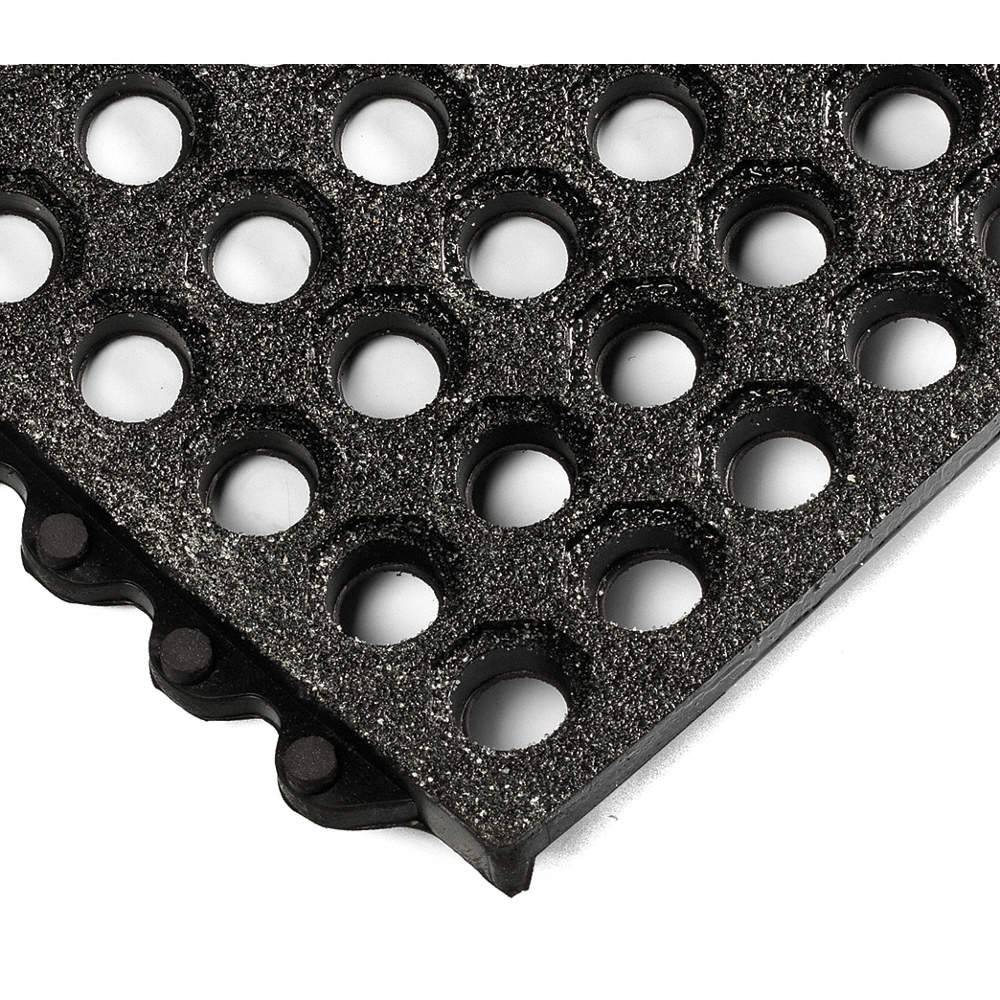
What is Nitrile Rubber and How It’s Used?
Nitrile Rubber, also known as NBR, is a synthetic elastomer made from the copolymerization of acrylonitrile and butadiene. This material is highly valued for its excellent resistance to oils, fuels, chemicals, and abrasion, making it ideal for industrial, automotive, and mechanical applications.
At SUMIPARTS SAS, we specialize in transforming Nitrile Rubber through advanced vulcanizing and extrusion processes. Our capabilities allow the production of high-quality custom components, ensuring dimensional precision, durability, and performance under extreme conditions.
Essential Industrial Nitrile Rubber Applications & Market Integration
Reviewing the comprehensive balance of nitrile rubber industrial applications showcases its critical role across North America’s primary engineering networks:
Hydraulics & Fluid Power: Manufacturing high-pressure rod seals, wiper rings, piston cups, and custom distributor manifolds for excavators, agricultural equipment, and industrial manufacturing presses.
Automotive & Powertrain Systems: Production of fuel line hoses, carburetor diaphragms, crankshaft oil seals, and engine valve cover gaskets exposed to hot engine oils.
Petroleum Exploration & Refining: Heavy-duty packer elements, blowout preventer (BOP) seals, and fuel transfer coupling gaskets engineered to withstand rugged oilfield handling.
Pneumatic Infrastructure: Low-permeability diaphragm seals for air regulators, pneumatic cylinders, and directional control valves.
Advantages of Nitrile Rubber:
- Excellent chemical, oil, and fuel resistance:
Nitrile Rubber is widely recognized for its outstanding resistance to oils, fuels, and a broad range of chemicals. This property makes it an ideal material for automotive seals, gaskets, hoses, and industrial components exposed to harsh fluids or corrosive environments. - High abrasion and mechanical wear resistance:
Components made from Nitrile Rubber exhibit superior durability and wear resistance. Its ability to withstand repeated friction, stress, and mechanical loads ensures long-lasting performance in demanding industrial applications, including conveyor systems, vibration dampers, and hydraulic assemblies. - Durable under moderate temperature variations and dynamic stress:
Nitrile Rubber maintains its elasticity and functional integrity even under fluctuating temperatures and continuous mechanical stress. This stability allows it to perform reliably in automotive, industrial, and construction environments where dynamic conditions are common. - Easy to process through vulcanization and extrusion techniques:
Nitrile Rubber can be efficiently shaped using advanced vulcanization and extrusion processes. These methods allow for precise manufacturing of complex geometries, high-volume production, and consistent quality across all NBR components. - Cost-effective compared to other specialty synthetic rubbers:
The combination of performance, chemical resistance, and mechanical durability makes Nitrile Rubber a highly cost-effective solution. It provides the advantages of specialty synthetic rubbers at a lower production cost, making it ideal for large-scale industrial and automotive applications.
Manufacturing and Customization of Nitrile Rubber (NBR)
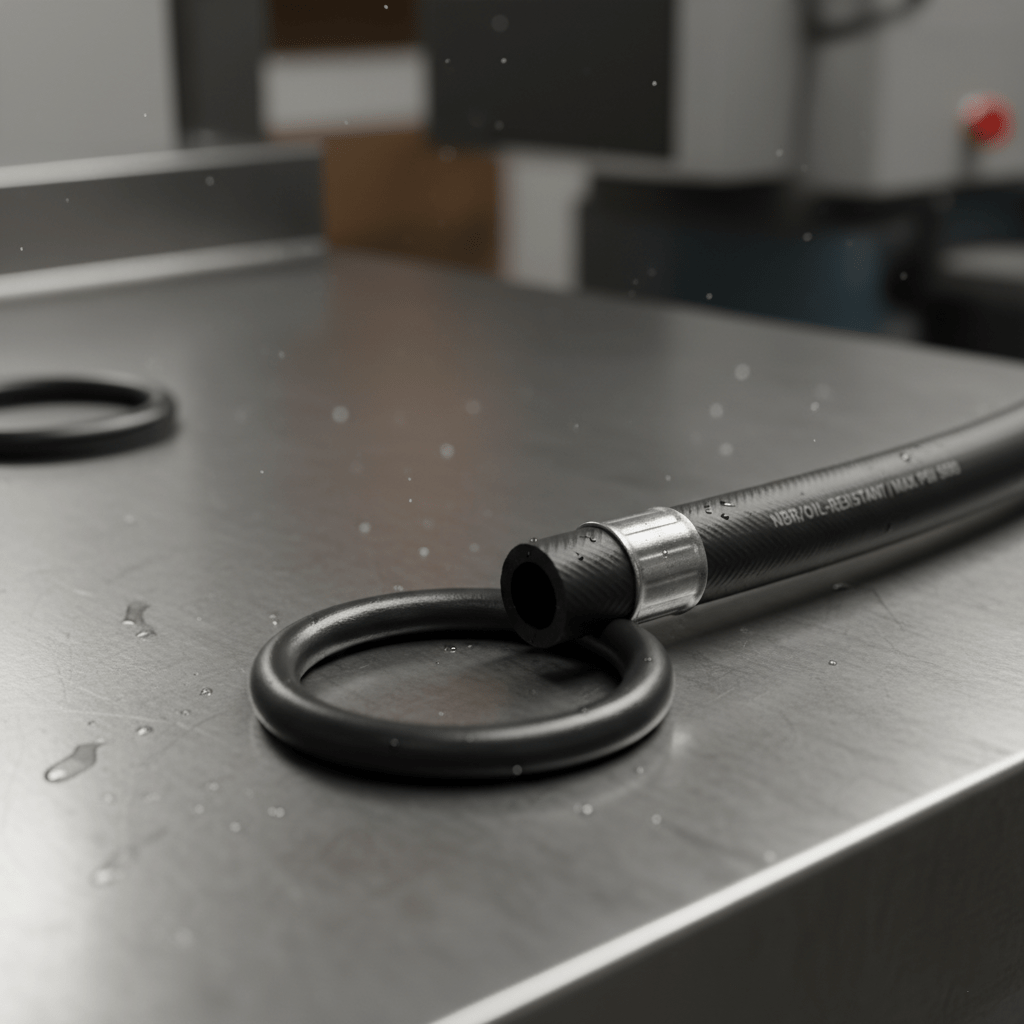
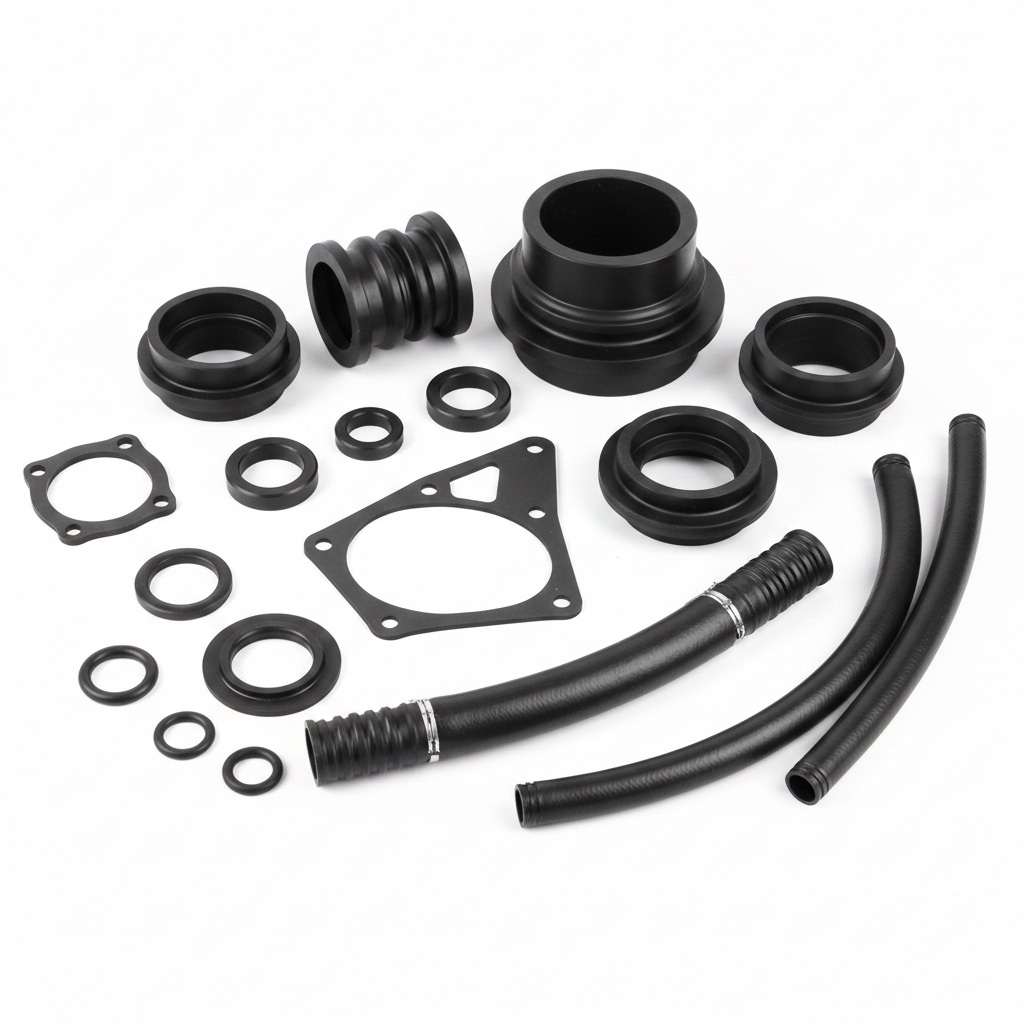
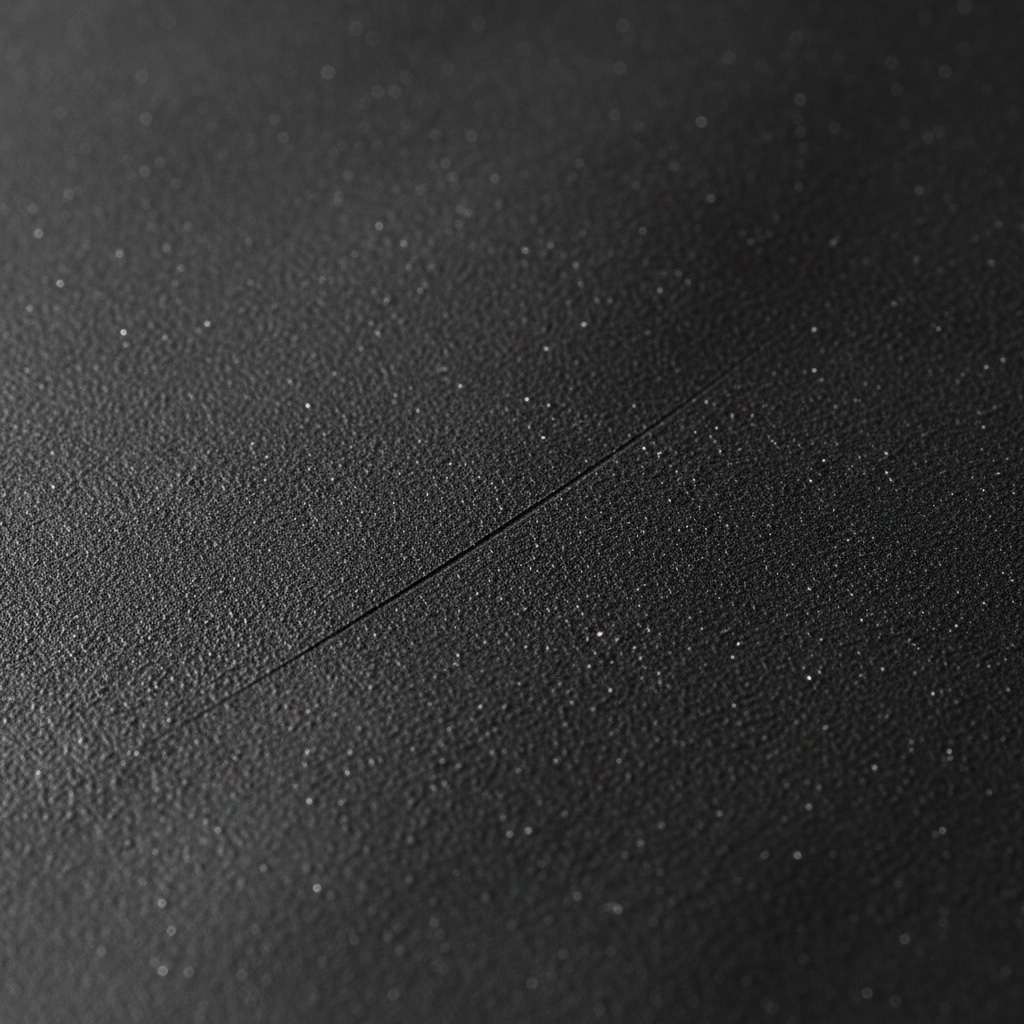
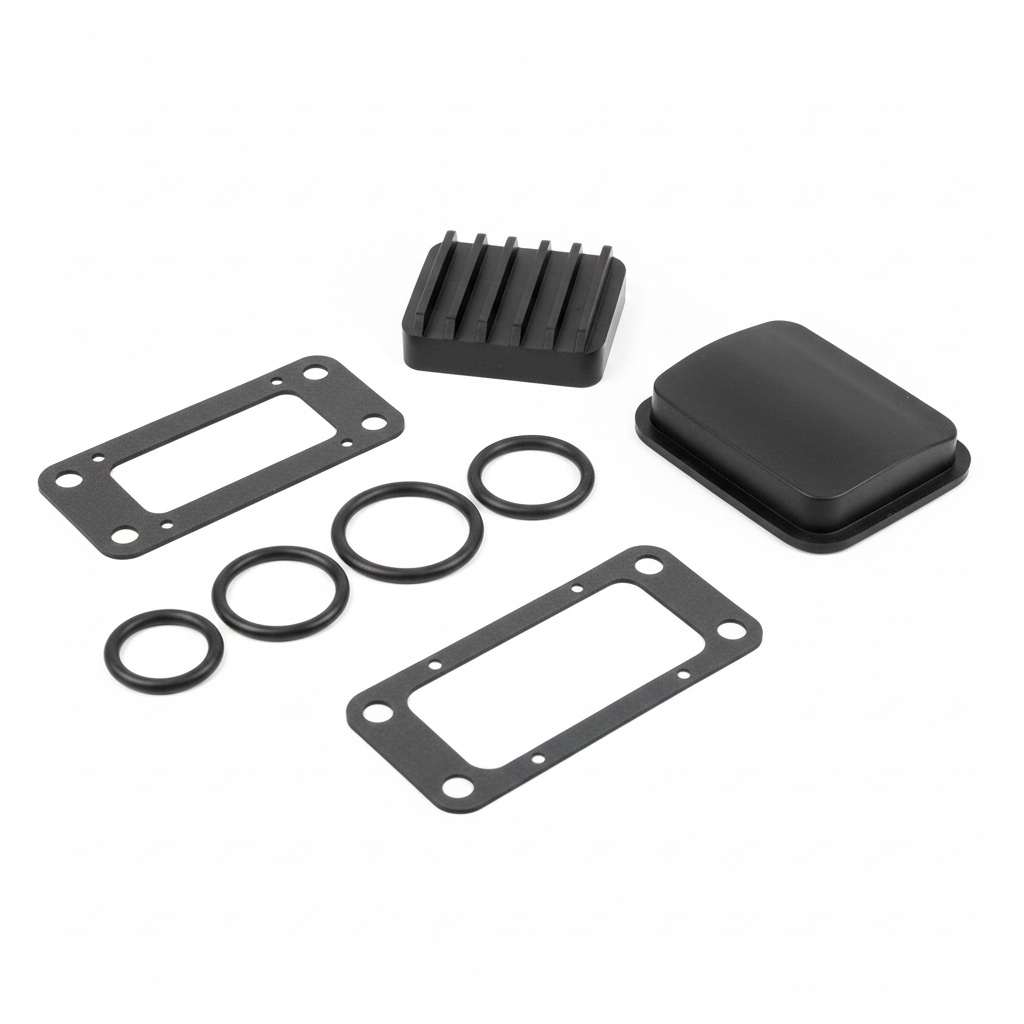
At SUMIPARTS SAS, Nitrile Rubber (NBR) undergoes advanced industrial processes specifically designed to deliver precision, consistency, and high scalability for industrial and automotive applications. Our extensive expertise allows us to transform raw NBR material into high-quality, durable components through vulcanization, extrusion, and molding techniques, ensuring each product meets the strictest performance and safety standards.
Our team works closely with clients to define the optimal grade, hardness, and geometry for each project, tailoring every NBR part to its intended function. From complex seals, gaskets, and O-rings to hoses, vibration-damping components, and custom industrial parts, SUMIPARTS SAS combines material science with state-of-the-art machinery and precision tooling to create reliable, high-performance products.
The advanced manufacturing processes we employ allow us to maintain high-volume production while ensuring consistent quality in every batch. This attention to detail guarantees that Nitrile Rubber components retain their elasticity, chemical resistance, and mechanical durability, even under extreme operating conditions or prolonged use.
By leveraging innovative production techniques and close collaboration with our clients, SUMIPARTS SAS provides customized NBR solutions across a wide range of industries. These include automotive, industrial machinery, construction, hydraulic systems, and specialized equipment, where performance, safety, and reliability are critical. Our focus on precision, customization, and efficiency ensures that every Nitrile Rubber component we manufacture not only meets but exceeds client expectations, offering long-term value and performance in demanding industrial environments.
Contact us by calling the Pbx: +57 748 22 13, mobile phones (+57) 313 699 13 56 WhatsApp click here , or by sending an email to info@sumiparts.us. Our technical team will be at your disposal to assist you.
Managing Oil-Swell Dynamics and Volume Change Tolerances
For fluid-power designers and quality assurance engineers, predicting volume swell is the single most critical variable when designing an NBR fluid barrier. When Nitrile rubber absorbs hydrocarbons, the fluid penetrates the intermolecular spaces of the polymer matrix, causing the material to physically expand.
While excessive swell (greater than 20% to 30%) softens the rubber and leads to extrusion failures under high hydraulic pressures, a controlled micro-swell (typically 3% to 8%) is actually highly desirable in fixed industrial joints.
The engineering desk at Sumiparts leverages this material property during the tooling design phase. By calculating the expected volume change of the specified NBR grade against the chemical profile of the target fluid (such as ASTM Reference Oil No. 1 or No. 3), we optimize the gland volume inside the metal housing. The controlled expansion of the Nitrile compound actively fills microscopic surface machining marks on the mating metal flanges, creating an energetic, high-integrity seal that counteracts mechanical system micro-vibrations and prevents zero-pressure weeping.
Advanced Molding Architecture for Flashless O-Ring Production
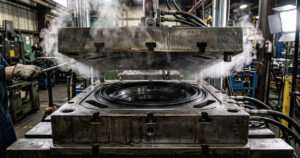
During high-volume NBR compression and injection molding cycles, the flow behavior of the hot rubber can create a significant manufacturing challenge: heavy parting-line flash. Excessive flash along the sealing diameter of an O-ring or dynamic lip seal acts as a microscopic leak channel and leads to rapid tearing when installed inside automated assembly lines.
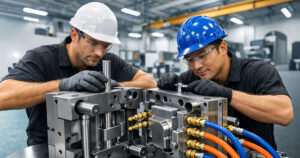
Our toolroom eliminates this vulnerability by engineering high-precision flashless closure molds. We machine our core and cavity plates using multi-axis CNC surface grinders to lock in a matching planarity within +/- 0.002 mm
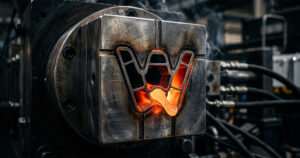
Additionally, we integrate specialized overflow traps and knife-edge pinch lines directly into the parting tool layout. As the NBR compound cures under full hydraulic tonnage, excess material is driven into secondary retention reservoirs, leaving a paper-thin, easily detachable micro-web. The resulting components feature a perfectly flush, seamless outer diameter that requires zero mechanical trimming and guarantees uncompromised sealing contact during dynamic field operations.
Technical Performance Matrix of Nitrile Rubber
When properly vulcanized, NBR represents one of the most mechanically balanced and cost-effective elastomers in the heavy manufacturing sector:
Exceptional Hydrocarbon Resistance: Complete chemical stability against mineral oils, hydraulic fluids, vegetable oils, fresh water, and fuel oils.
High Abrasion and Tear Resistance: Outperforms silicone and fluorosilicone rubbers in dynamic industrial sealing environments where components brush against rotating metal shafts or rough piston walls.
Low Gas Permeability: Outstanding vacuum containment and gas retention properties, crucial for high-pressure pneumatic systems and gas distribution lines.
Compression Set Stability: Retains its mechanical elastic memory under continuous clamping pressure, ensuring a tight fluid barrier over extended lifecycle operations.


 English