
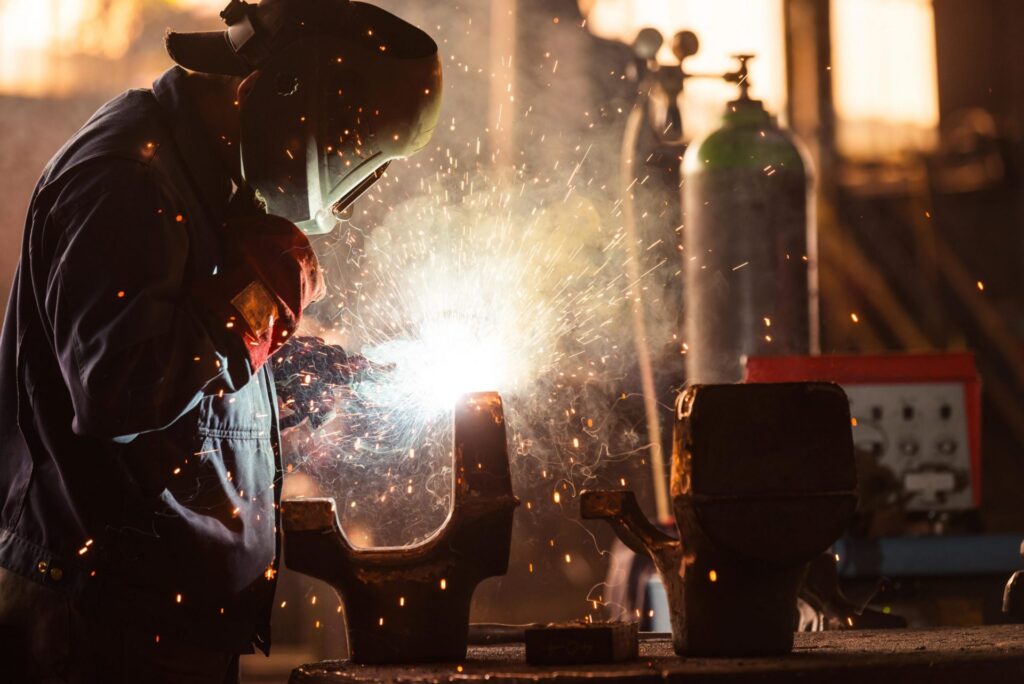
What is Shielded Metal Arc Welding?
Shielded Metal Arc Welding (SMAW), commonly known as manual arc welding, is one of the most widely used welding processes in metal fabrication. It uses an electric arc between a coated electrode and the metal workpiece to melt both the electrode and the base metal, forming a solid and durable joint once cooled.
The coating on the electrode produces a shielding gas and a layer of slag that protects the molten metal from atmospheric contamination, ensuring strong and defect-free welds.
If you want to know more about the SMAW welding, at SUMIPARTS we are willing to collaborate with you. We want to provide you with the best services at your reach. Get in touch with us by calling Pbx: +57 748 22 13 Cel: 313 699 13 56 or by sending an email to info@sumiparts.com. Our technical team will be ready to assist you.
Understanding Welding in Modern Manufacturing
Welding is one of the most fundamental processes in modern metal fabrication. It allows different metal components to be permanently joined through the application of heat, pressure, or both, creating a solid bond that can withstand heavy mechanical stress. From small repair tasks to large-scale industrial production, welding ensures strength, precision, and structural integrity across countless applications.
There are many types of welding, including Shielded Metal Arc Welding (SMAW), Tungsten Inert Gas (TIG) Welding, Metal Inert Gas (MIG) Welding, and Plasma Arc Welding. Each method serves specific purposes depending on the type of metal, thickness, and environmental conditions. The selection of the right welding technique is critical to achieving durable and consistent joints.
Why Welding is Essential in the Metal Industry
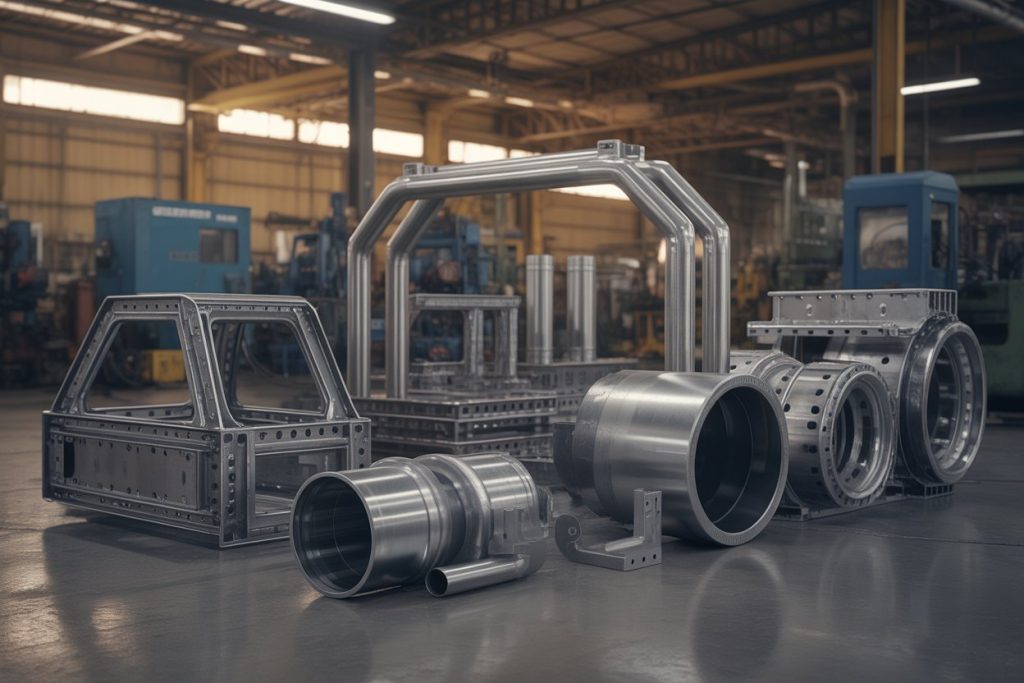
The importance of welding in the metal industry cannot be overstated. It plays a key role in manufacturing everything from construction beams and automotive frames to pipelines, machinery, and custom industrial components. Unlike mechanical fastening, welding creates a metallurgical bond, producing seamless, high-strength structures.
Beyond its mechanical advantages, welding also supports design flexibility. Complex geometries, lightweight assemblies, and aesthetic finishes are possible when advanced welding processes are combined with machining, cutting, or polishing. This makes welding a vital step in the full manufacturing cycle — from prototyping to final production.
How the Welding Process Works
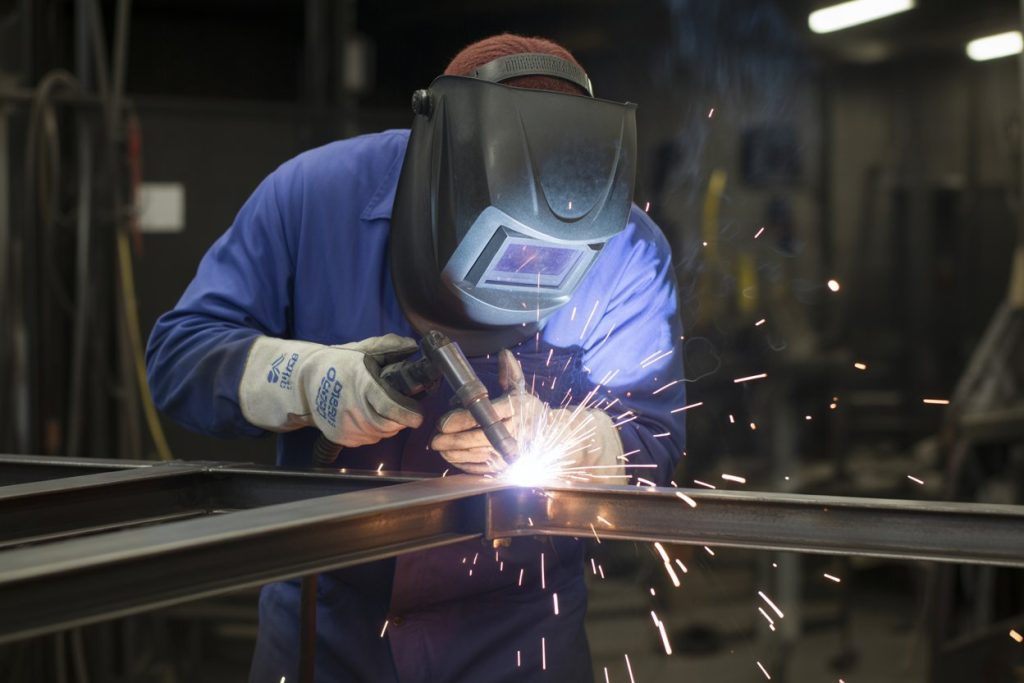
The Shielded Metal Arc Welding process begins when the electrode tip touches the workpiece and an electric current flows, generating an arc of intense heat—often exceeding 6000°C.
This heat melts the metals, and as the welder moves the electrode, a continuous bead of molten material forms along the joint.
When the arc moves forward, the molten metal solidifies, creating a metallurgical bond. The slag layer that remains on top must be removed after each pass to expose the clean weld beneath.
Advantages of Shielded Metal Arc Welding
This welding process offers several practical and technical benefits, especially in construction, repair, and heavy manufacturing:
-
Versatility: Works with ferrous and non-ferrous metals, both indoors and outdoors.
-
Portability: Compact equipment ideal for field work or confined spaces.
-
Strong joints: Produces high mechanical resistance and long-lasting connections.
-
Cost-effective: Requires simple equipment and minimal maintenance.
-
Adaptability: Performs well in various positions—flat, vertical, or overhead.
Industrial Applications
SMAW is essential in sectors such as:
-
Structural fabrication: beams, frames, and supports.
-
Shipbuilding and marine repairs.
-
Pipe welding for oil, gas, and water lines.
-
Machinery and equipment maintenance.
-
Automotive restoration and heavy transport.
Its reliability makes it ideal for jobs where durability and field performance are crucial.
Best Practices for Quality Welds
To obtain consistent and precise results in welding operations, it’s important to:
-
Keep electrodes dry and free from moisture.
-
Clean surfaces of rust, oil, and contaminants before welding.
-
Maintain correct arc length and electrode angle.
-
Choose proper current (AC/DC) according to electrode type.
-
Control cooling time to prevent cracks and stress in the joint.
These measures help guarantee uniform, professional results—especially when combined with machining or finishing processes like CNC turning or metal polishing.
Universal Positional Competency: 1G to 6G Configuration Excellence
Unlike automated shop processes that are constrained to flat or horizontal orientations, industrial field operations demand a welding partner capable of executing code-compliant joints in restrictive, high-stress positions. Our welding operators maintain certifications across the complete American Welding Society (AWS) positional matrix:
Flat (1G/1F) & Horizontal (2G/2F): Optimized for high-deposition, rapid-fill structural fabrication using high-amperage current profiles to maximize output on massive shop weldments.
Vertical Up (3G/3F) & Overhead (4G/4F): Executed with precise puddle manipulation and current adjustments to counteract gravity-induced sagging. Our welders deploy specialized freezing-slug electrodes that instantly anchor the root pass in complex building frameworks and overhead crane runways.
Restricted Pipe Orientations (5G & 6G): The absolute peak of welding proficiency. Our team regularly locks in full-penetration, zero-defect root beads on fixed-position pressure piping inclined at a 45° angle (6G), guaranteeing uncompromised fluid-dynamic sealing under high system pressures.
Advanced Quality Assurance: Non-Destructive Testing (NDT) Verification Frameworks | ARC Welding
To guarantee an absolute zero-defect output for infrastructure and high-stress industrial assets, the welding cells at Sumiparts do not rely on simple visual inspections. Critical weldments are subjected to complete, multi-tiered Non-Destructive Testing (NDT) validation protocols administered by ASNT Level II certified quality inspectors:
Magnetic Particle Testing (MT): Utilizing electromagnetic yokes and high-contrast fluorescent iron powders to instantly detect microscopic surface-breaking fatigue cracks and toe defects that are completely invisible to the naked eye.
Ultrasonic Volumetric Testing (UT): We deploy high-frequency digital ultrasonic transducers that shoot sound waves straight through the core of the weldment. By analyzing the reflected wave patterns on real-time calibration monitors, our inspectors can map the exact depth, length, and volume of any sub-surface imperfections down to fractions of a millimeter. This testing guarantees that every structural joint delivered to your site possesses total internal integrity and uncompromised load-bearing safety.
Build Your Industrial Foundation with Sumiparts | Shielded Metal Arc Welding
Securing your high-load infrastructure, pressure piping, or heavy equipment chassis requires a contract manufacturing partner that treats weld penetration, consumable chemistry, and quality code compliance with absolute data-driven discipline. Partnering with Sumiparts grants your project management and engineering desks access to AWS-certified welding inspectors (CWI), full Weld Procedure Specifications (WPS), and complete Procedure Qualification Records (PQR) optimized for strict North American industrial audits. Secure your joint integrity. Contact our contract engineering office today to submit your fabrication drawings and coordinate an expert technical review.
Conclusion | Shielded Metal Arc Welding
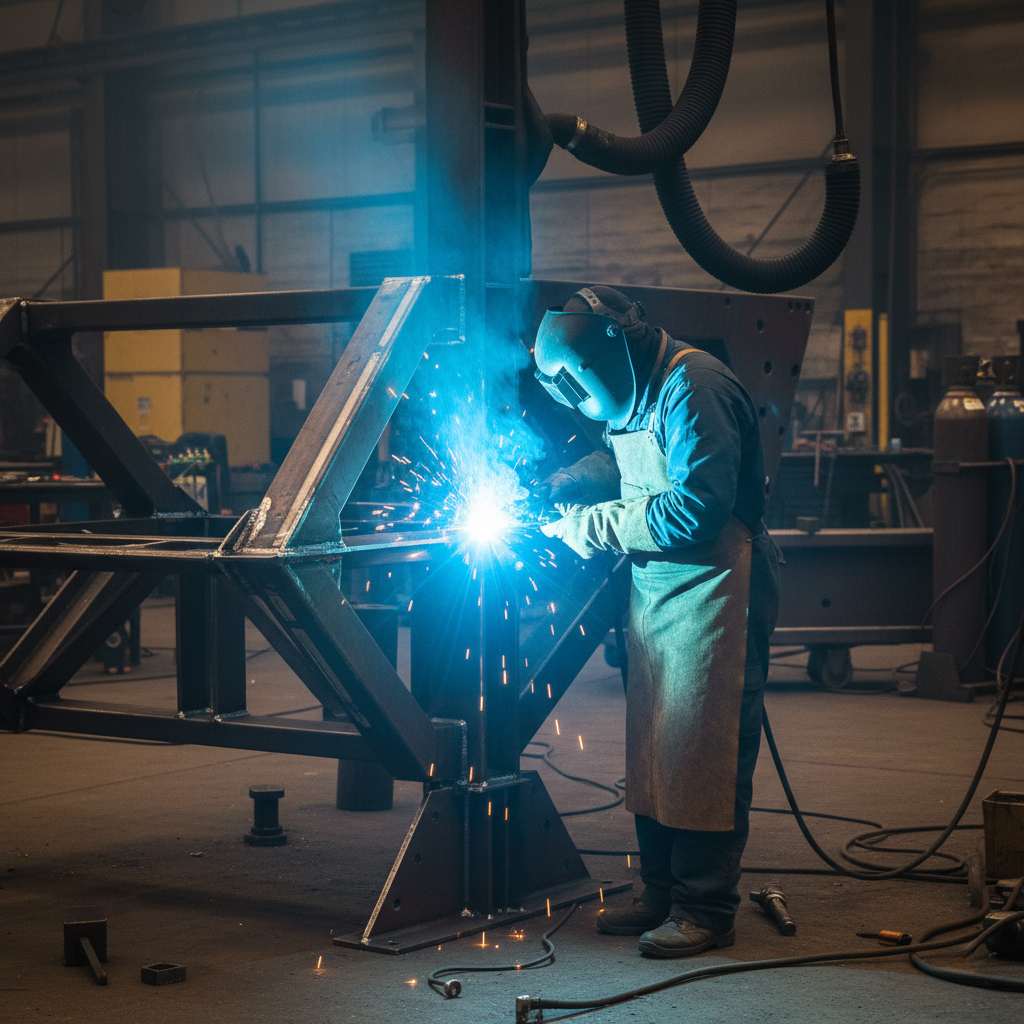
Shielded Metal Arc Welding remains a cornerstone of industrial fabrication due to its simplicity, efficiency, and strength. Despite technological advances in MIG or TIG welding, SMAW continues to be a reliable, field-proven process used worldwide for maintenance and construction tasks that demand precision and durability.


 English