
Reverse Engineering
Reverse engineering has become a key process in modern manufacturing, allowing companies to analyze, reproduce, and improve existing parts and systems. At SUMIPARTS, we use this technology to provide efficient, cost-effective, and precise solutions for clients in the automotive, industrial, and energy sectors.
Through detailed digital analysis and 3D scanning, we can obtain accurate geometries from an existing part and transform them into fully functional digital models. This approach allows us to restore obsolete parts, enhance performance, and adapt designs for modern production requirements — without needing original technical documentation.
The Reverse Engineering Process
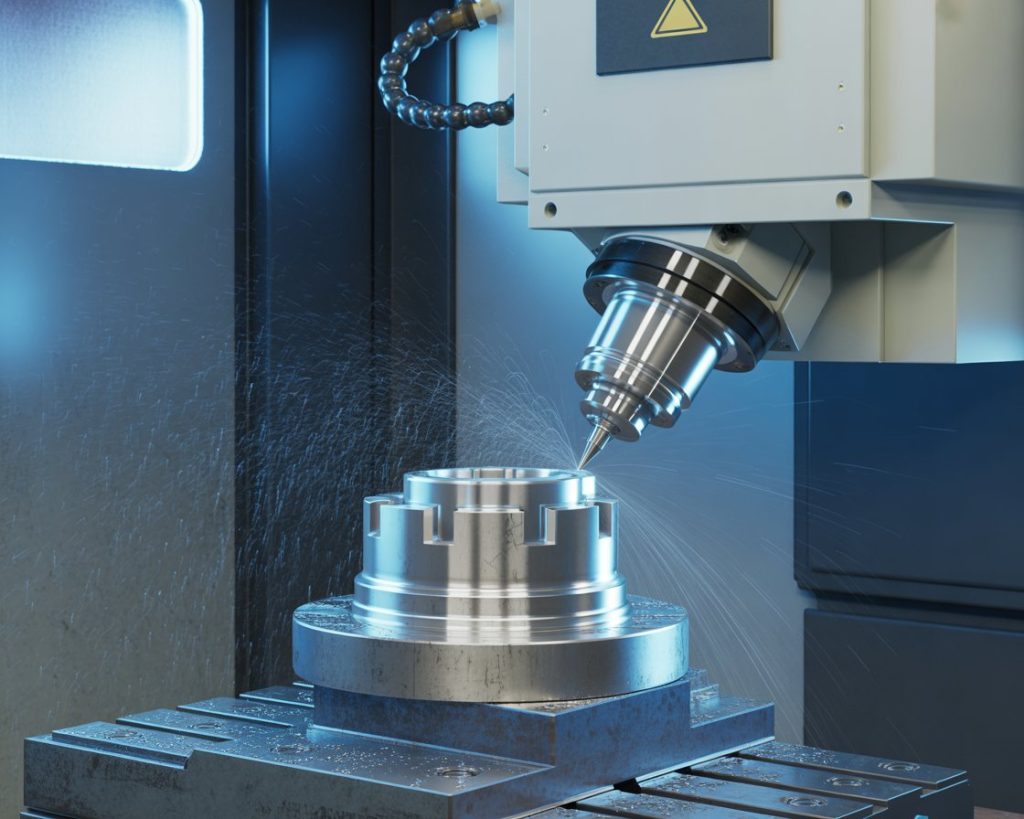
Our reverse engineering process combines advanced 3D scanning, CAD modeling, and CNC machining to ensure dimensional accuracy and mechanical performance. The main stages include:
-
3D Data Acquisition: Using high-resolution scanners, we capture the geometry and surface details of the original part with micron-level accuracy.
-
Digital Reconstruction: The captured data is processed through CAD software to generate a detailed 3D model.
-
Design Optimization: Our engineering team analyzes and refines the digital model to improve performance, reduce weight, or enhance durability.
-
Manufacturing and Testing: The optimized design is then produced using CNC machining or additive manufacturing technologies, ensuring perfect fit and function.
This process not only allows accurate part reproduction but also opens the door to continuous improvement and modernization of existing components.
The Metrological Phase: High-Density 3D Data Capture
The foundation of modern reverse engineering is data fidelity. Our metrology floor utilizes non-contact and tactile scanning systems to capture surface topographies with micron-level resolution:
Blue-Light Optical 3D Scanning: Utilizing industrial structured-light scanners that project precise fringe patterns onto the component. Blue-light technology features narrow-band filtering that isolates ambient factory light, allowing us to capture millions of coordinate points per second with a volumetric accuracy down to $\pm0.01\text{ mm}$. This is ideal for complex casting profiles, stamped automotive housings, and intricate injection mold inserts.
Articulated CMM Tactile Probing: For deep internal geometries, counterbores, and precision threaded intersections where line-of-sight optical scanners cannot reach, we deploy multi-axis portable CMM arms equipped with ruby-tipped touch probes to map coordinate locations.
Industrial Applications of Reverse Engineering
Reverse engineering plays a vital role in sectors that require the replication or enhancement of high-performance parts:
-
Automotive industry: Reproduction of discontinued or customized components.
-
Aerospace and energy: Precision restoration of mechanical and hydraulic parts.
-
Industrial machinery: Replacement of worn or obsolete components to extend equipment lifespan.
-
Medical devices: Development and improvement of specialized tools and instruments.
At SUMIPARTS, we adapt our reverse engineering services to each client’s needs — whether it’s for small prototypes or full-scale production.
Benefits of Reverse Engineering
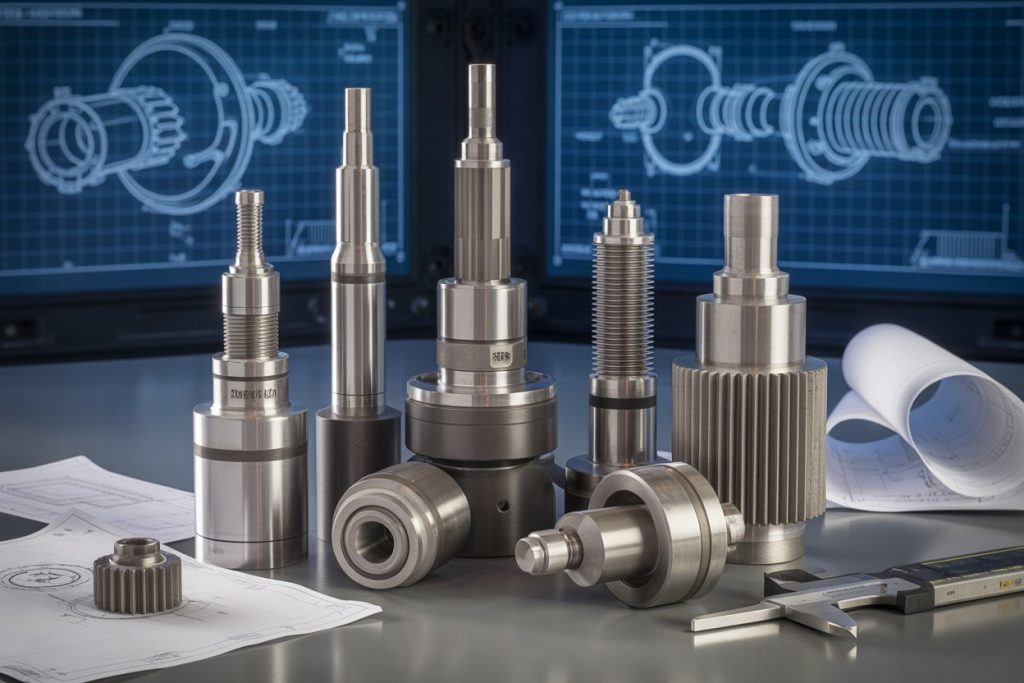
Beyond its obvious technical advantages, this process represents a strategic tool for companies that seek to modernize production, improve efficiency, and strengthen product reliability. By understanding how each component behaves under real operating conditions, engineers can make informed decisions to enhance materials, optimize tolerances, and refine the overall design of the part.
Another remarkable benefit lies in the ability to recreate discontinued parts that are no longer available on the market. This is especially valuable for industries that operate legacy equipment or machinery where replacement parts are difficult to obtain. With accurate digital reconstruction, manufacturers can reproduce components with the same functionality — or even improve them — without relying on the original supplier.
The methodology also helps reduce maintenance costs by detecting weaknesses and wear patterns before they cause failures. When combined with digital inspection systems and 3D modeling, it allows for predictive maintenance and continuous improvement programs.
Furthermore, this approach contributes to sustainability, as it minimizes waste by reusing existing designs and extending the operational life of mechanical systems. Companies not only save on production and material costs but also reduce their environmental footprint.
In summary, reverse engineering has evolved from being a repair-oriented process to a powerful innovation tool that drives competitiveness and technological independence. At SUMIPARTS, we use this methodology not just to replicate — but to innovate, improve, and deliver smarter industrial solutions.
If you want to know more about the REVERSE ENGINEERING, at SUMIPARTS we are willing to collaborate with you. We want to provide you with the best services at your reach. Get in touch with us by calling Pbx: +57 748 22 13 Cel: 313 699 13 56 or by sending an email to info@sumiparts.com. Our technical team will be ready to assist you.
Metallurgical Forensic Analysis: Matching the Exact Alloy
Replicating the shape of an industrial part is useless if the underlying metal fails under mechanical load. When a client brings an undocumented component to Sumiparts, our quality laboratory performs comprehensive forensic metallurgy to determine its structural recipe:
Optical Emission Spectroscopy (OES) & XRF: We analyze the chemical composition of the alloy, mapping the exact percentages of carbon, chromium, molybdenum, or nickel.
Microhardness & Tensile Verification: Utilizing Rockwell and Vickers hardness testers to determine if the legacy part underwent specific thermal processing, such as through-hardening, induction surface hardening, or nitriding. By identifying the exact ASTM/AISI grade and thermal state, we ensure the newly manufactured part possesses the identical yield strength and fatigue wear resistance demanded by the field environment.
Parametric CAD Reconstruction: From Mesh to Master Model
The output of a 3D scanner is a polygonal mesh—a static, un-editable cloud of triangles. The apex of our reverse engineering precision innovation workflow is translating this raw scan data into a fully parametric, feature-based 3D CAD model (STEP, IGES, or Parasolid format).
Our design engineers do not just trace the mesh. We identify the original design intent by stripping away years of field wear, mechanical erosion, and material cavitation. If a shaft is worn down by 0.5 mm at a bearing journal, our software analyzes the concentricity of adjacent un-worn surfaces to mathematically reconstruct the nominal dimensions. We define true geometric centerlines, apply uniform thread pitches, and implement explicit manufacturing tolerances, providing you with a complete digital blueprint asset that is fully ready for CNC multi-axis milling, turning, or foundry tooling production.
A Comprehensive Engineering Partner
By integrating reverse engineering with our CNC machining, 3D design, and metrology capabilities, SUMIPARTS provides a complete solution for product recovery and enhancement. Our commitment to precision, reliability, and innovation ensures that each project meets the highest standards of industrial performance.
Turnkey Re-Manufacturing and Performance Optimization
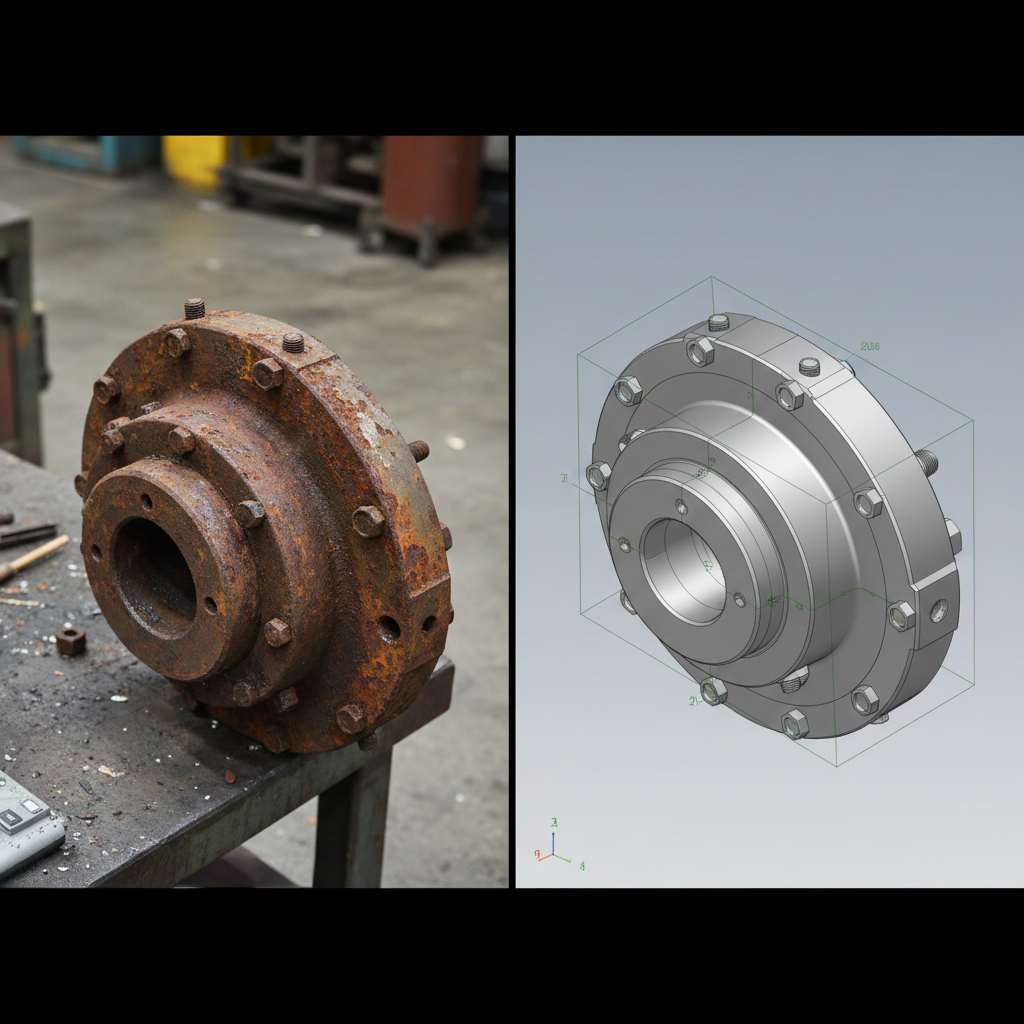
Because Sumiparts is a fully integrated contract manufacturing powerhouse, our reverse engineering loop feeds directly into our physical production cells. We don’t just hand you a file; we manufacture the physical replacement part.
Furthermore, our design desk looks for optimization opportunities. During the CAD reconstruction phase, we can execute Finite Element Analysis (FEA) to detect stress concentrations in the legacy design. We frequently help North American clients upgrade obsolete components—such as updating old cast-iron links to lightweight structural aluminum or replacing rapid-wearing steel bushings with self-lubricating polymers—driving down future maintenance overhead.
Driving Innovation Through Engineering Expertise
At SUMIPARTS, our approach to engineering goes beyond replication — it’s about transformation. Each project we undertake is an opportunity to merge technology, experience, and creativity to deliver smarter, more efficient solutions. Through the use of advanced metrology systems, 3D scanning, and CAD/CAM integration, we ensure that every reproduced component not only meets the original specifications but also achieves superior performance and reliability.
This philosophy has positioned us as a trusted partner for industries that value precision and innovation. Whether the goal is to optimize existing equipment, extend the lifespan of critical parts, or create improved versions of complex assemblies, our team works side by side with clients to achieve excellence at every stage.
Reverse engineering is, ultimately, a bridge between the past and the future of manufacturing — and at SUMIPARTS, we build that bridge with precision, purpose, and passion.


 English