
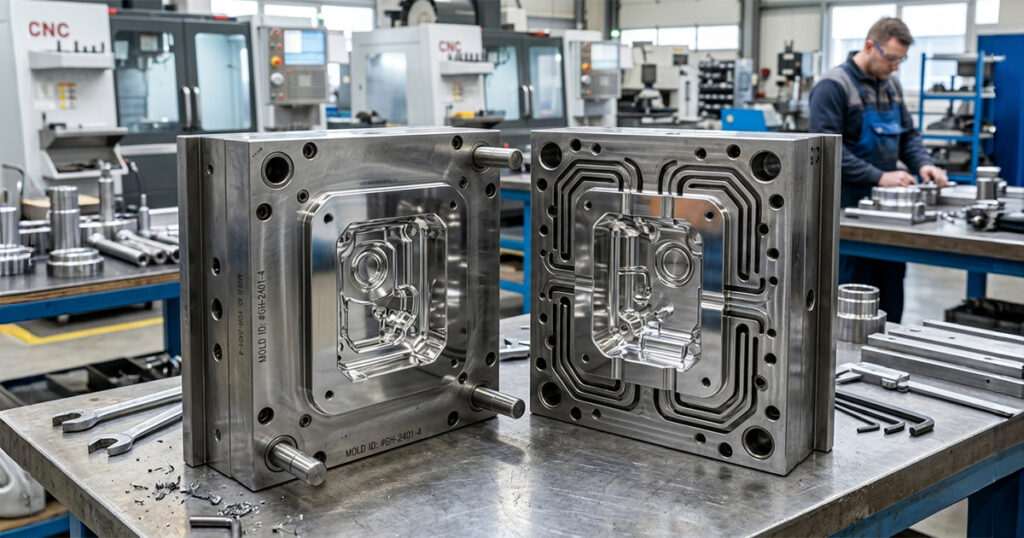
The Foundation of Industrial Excellence | Injection Molding
In the modern manufacturing landscape, the demand for precision, consistency, and cost-effectiveness has never been higher. At the heart of this demand lies the process of injection molding, a cornerstone of mass production for everything from automotive components to medical devices. However, many companies make the mistake of focusing solely on the molding machine’s parameters while overlooking the most critical variable in the equation: the mold itself.
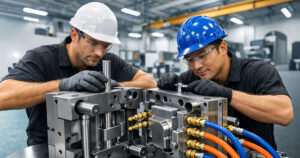
The art of making molds is a highly specialized branch of engineering. A mold is not just a hollow cavity; it is a complex, high-performance tool that must withstand extreme pressures, rapid temperature fluctuations, and hundreds of thousands of cycles without losing its dimensional integrity. In this guide, we will explore why precision in mold making is the absolute key to achieving high-quality results and how it impacts your bottom line.
The Crucial Role of Mold Quality in Product Success
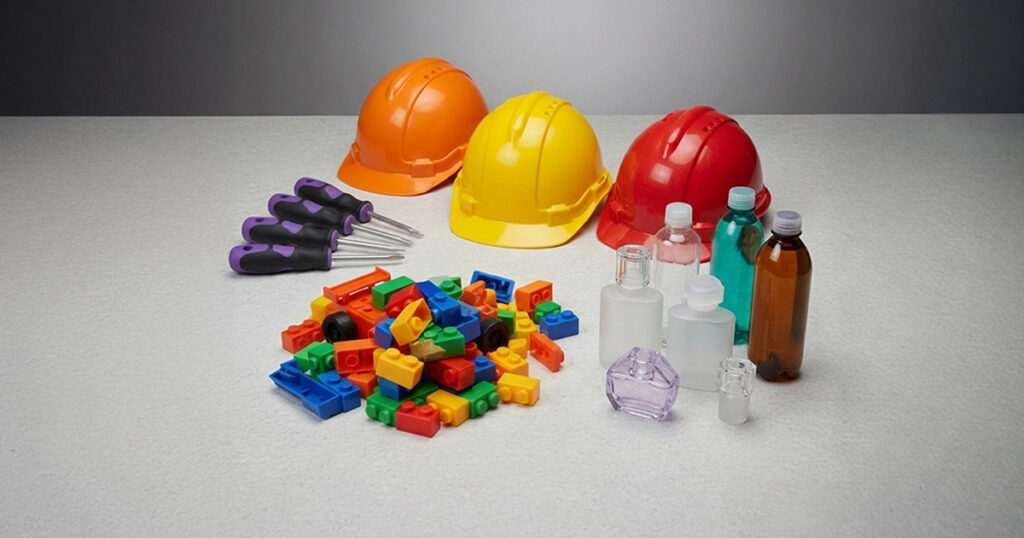
When we talk about high-quality injection molding, we are referring to parts that meet strict tolerances, have flawless surface finishes, and possess structural integrity. None of this is possible without a superior mold.
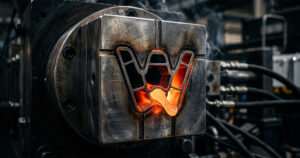
The mold dictates every physical characteristic of the part. If there is a deviation of even a few microns in the mold’s cavity, it will be replicated in every single piece produced. For industries where “close enough” isn’t an option—such as aerospace or electronics—the precision involved in making molds is the only safeguard against massive product recalls and assembly line failures.
The Crucial Role of Mold Quality in Product Success
Time is money in manufacturing. When making molds with high precision, we focus on:
- Cooling Channel Design: Optimized paths ensure parts cool uniformly and quickly.
- Venting: Proper air escape prevents burn marks and short shots.
- Result: Better engineering reduces the seconds spent in each injection molding cycle, significantly lowering the cost per part.
Strategic Material Selection for Mold Durability
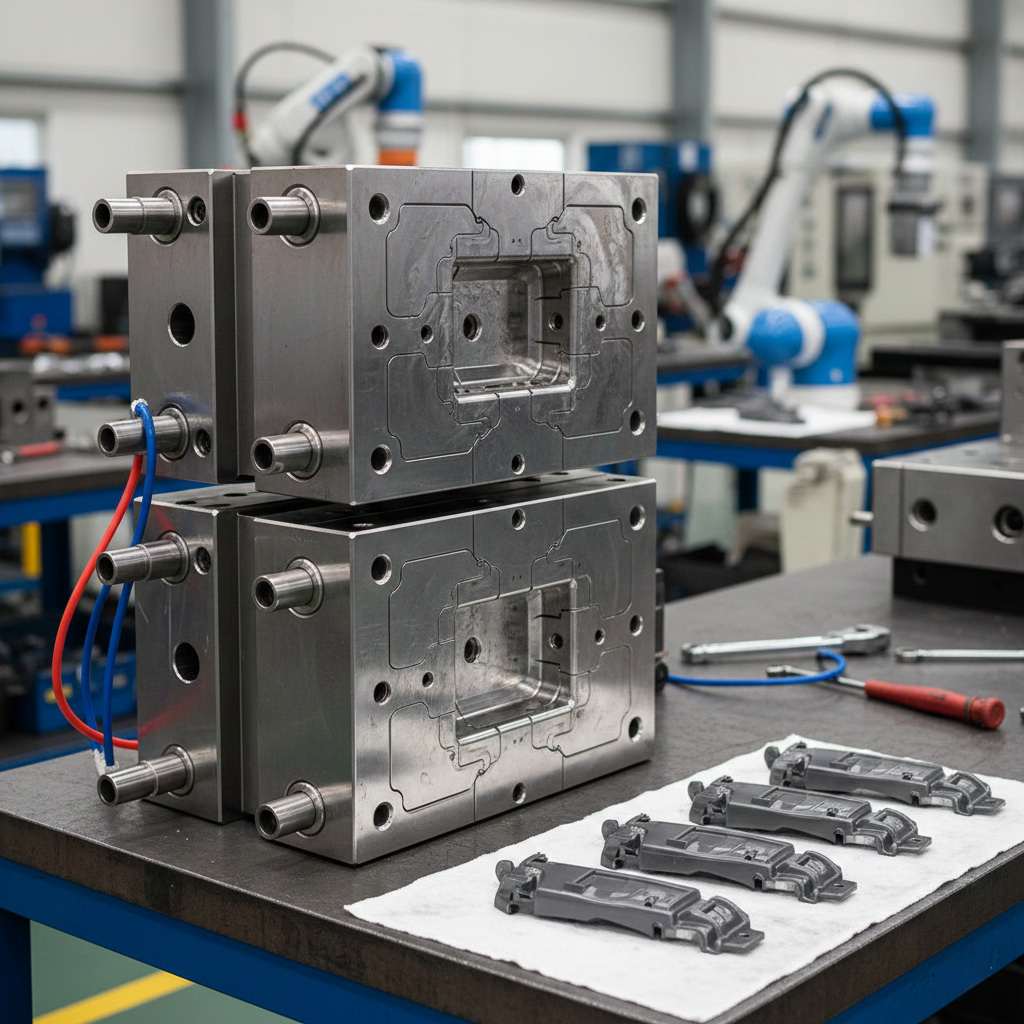
The first step in making molds that last is selecting the appropriate material. The choice of metal affects not only the cost of the tool but also its thermal conductivity and lifespan.
- P20 and H13 Tool Steels: These are the industry standards for high-volume production. H13, in particular, is valued for its ability to resist thermal fatigue (cracking) during the intense heating and cooling phases of injection molding.
- Stainless Steels (e.g., S136): Essential for medical-grade parts or when working with corrosive resins. These steels offer high polishability for “mirror-finish” parts.
- Aluminum Alloys: Often misunderstood, high-grade aluminum is excellent for prototyping or mid-range production runs. Its superior heat transfer capabilities can significantly shorten cycle times, though it lacks the extreme wear resistance of hardened steel.
Choosing the right material ensures that the tool can withstand the abrasive nature of glass-filled resins and the high-clamping forces of the injection press.
Engineering Precision: Where Science Meets Craftsmanship
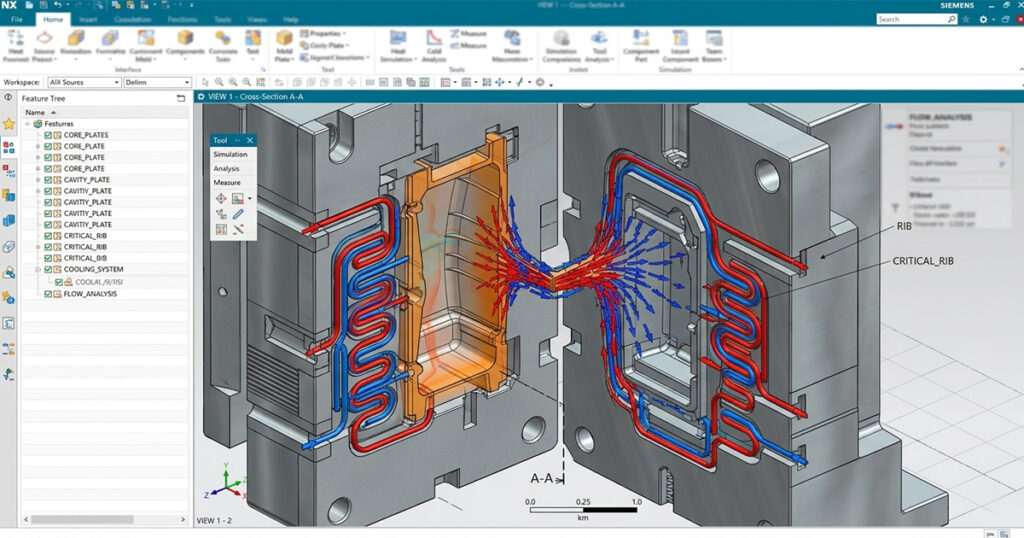
The process of making molds has evolved from manual machining to advanced CAD/CAM/CAE integration. Precision engineering allows us to simulate the flow of molten plastic before a single piece of steel is cut.
Optimized Cooling Systems
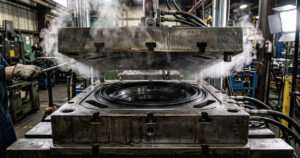
One of the most complex aspects of mold design is the cooling system. Inefficient cooling accounts for nearly 80% of the injection molding cycle time. Precision engineering allows for “conformal cooling,” where channels follow the geometry of the part, ensuring uniform temperature distribution. This prevents warping and internal stresses in the final product.
Tight Tolerances and CNC Machining
Using high-speed CNC machining and EDM (Electrical Discharge Machining), we can achieve tolerances in the range of ±0.005mm. This level of accuracy ensures that mold halves align perfectly, eliminating “flash”—that unwanted thin layer of plastic that escapes through the gaps of a poorly fitted mold.
How Precision Engineering Reduces Cycle Time and Costs
In mass production, every second counts. If a precision-engineered mold can shave just 2 seconds off a 20-second cycle, the cumulative savings over a run of 500,000 parts are astronomical.
By focusing on the thermodynamics of making molds, engineers can ensure faster gate solidification and part ejection. A mold that “runs cool” and ejects smoothly reduces the mechanical strain on the injection molding machine, lowering energy consumption and maintenance costs for the entire facility.
Preventing Common Defects through Superior Design
A cheap mold is often the most expensive investment a company can make. Poorly designed tools lead to a variety of defects that plague the injection molding process:
- Sink Marks: Often caused by thick sections in the part design or inadequate cooling in the mold.
- Short Shots: Occur when the resin cannot reach the end of the cavity due to poor venting or thin wall sections.
- Warping: A result of non-uniform cooling, which is a direct consequence of subpar engineering during the stage of making molds.
Precision in the design phase allows for “Mold Flow Analysis,” which predicts these issues, allowing engineers to adjust gate locations and wall thicknesses before production begins.
The Impact of Mold Maintenance on Consistency
Even a masterpiece of engineering requires care. The relationship between making molds and maintaining them is inseparable. A high-quality tool is designed with maintenance in mind, featuring easily accessible grease points and replaceable inserts for high-wear areas.
A well-maintained mold ensures that the 1,000,000th part is as perfect as the 1st. Without a strict maintenance protocol, gas buildup can clog vents, and friction can wear down ejector pins, leading to dimensional drift and increased scrap rates.
The Economics of High-Quality Molds: ROI Analysis
When evaluating a quote for making molds, look beyond the initial price tag. Consider the Total Cost of Ownership (TCO):
- Initial Cost: The price of the tool.
- Operational Cost: How many parts can be produced per hour? (Cycle time).
- Scrap Rate: How many parts end up in the bin due to mold-related defects?
- Down Time: How often does the machine stop because the mold needs repair?
A precision mold may cost 20% more upfront but can deliver 50% more value over its lifetime through faster cycles and lower rejection rates.
Why Choosing the Right Manufacturing Partner Matters
The synergy between making molds and the actual injection molding service is what sets industry leaders apart. At Sumiparts, we understand that these two processes are two sides of the same coin. By integrating design, toolmaking, and production under one roof, we eliminate the “blame game” between the molder and the toolmaker.
Our commitment to precision engineering ensures that every project we undertake is optimized for performance, durability, and cost-efficiency.
Investing in Precision
The path to high-quality injection molding is paved with precision. From the initial CAD drawing to the final polished cavity, every decision made during the process of making molds impacts the success of your product. By prioritizing quality materials, advanced engineering, and proactive maintenance, you ensure that your manufacturing process remains a competitive advantage.
At Sumiparts, we don’t just make parts; we engineer success. Let us help you turn your next vision into a high-precision reality.
Learn More...
Want to learn more about our Injection Molding services?
SUMIPARTS is dedicated to serving you. We strive to bring the best solutions directly to you, whenever you need them. Reach out to us via PBX at + 57 601 748 22 13, call us at +57 313 699 13 56, or email us at grupoempresarial@sumiparts.com. Our team is eager to provide the support you deserve.



 English