
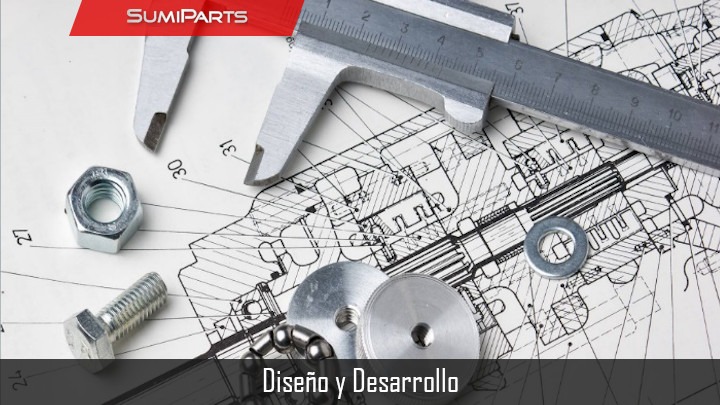
Design and Development: Foundations for Efficient Product Manufacturing
Design and development is the basis within the manufacturing process of a product, that aims to capture all the parameters, procedures and tolerances for its development, thus providing a clear point of reference to develop the evaluation and quality control process on future occasions
The development of new products has become a key factor in achieving business success. If in the eighties all efforts were focused on reducing the manufacturing cycle and implementing flexible production systems, the nineties have been accompanied by a change in perspective and a concern for the process of design and development of new products. Especially due to the reduction of the time used in the design and development of new products.
Sumiparts SAS specializes in the Design and Developments of Products for multiple market lines that can be found in the metallurgical, automotive and construction fields.
The NPI Framework: Our End-to-End Development Pipeline
We manage your product development lifecycle through a disciplined, stage-gated engineering process engineered to minimize technical and financial risk:
Phase 1: Conceptual Architecture & DFM Integration: We analyze your initial sketches or open CAD geometries, executing a strict Design for Manufacturing (DFM) and Design for Assembly (DFA) review. We optimize wall thicknesses, specify draft angles, and align configurations to match specific manufacturing processes (such as plastic injection molding, CNC machining, or sheet metal fabrication).
Phase 2: Virtual Prototyping & FEA Simulation: Before cutting tool steel or loading raw bars into our CNC machines, we subject your components to rigorous virtual testing. We execute stress, thermal, and fluid dynamics simulations to validate structural performance.
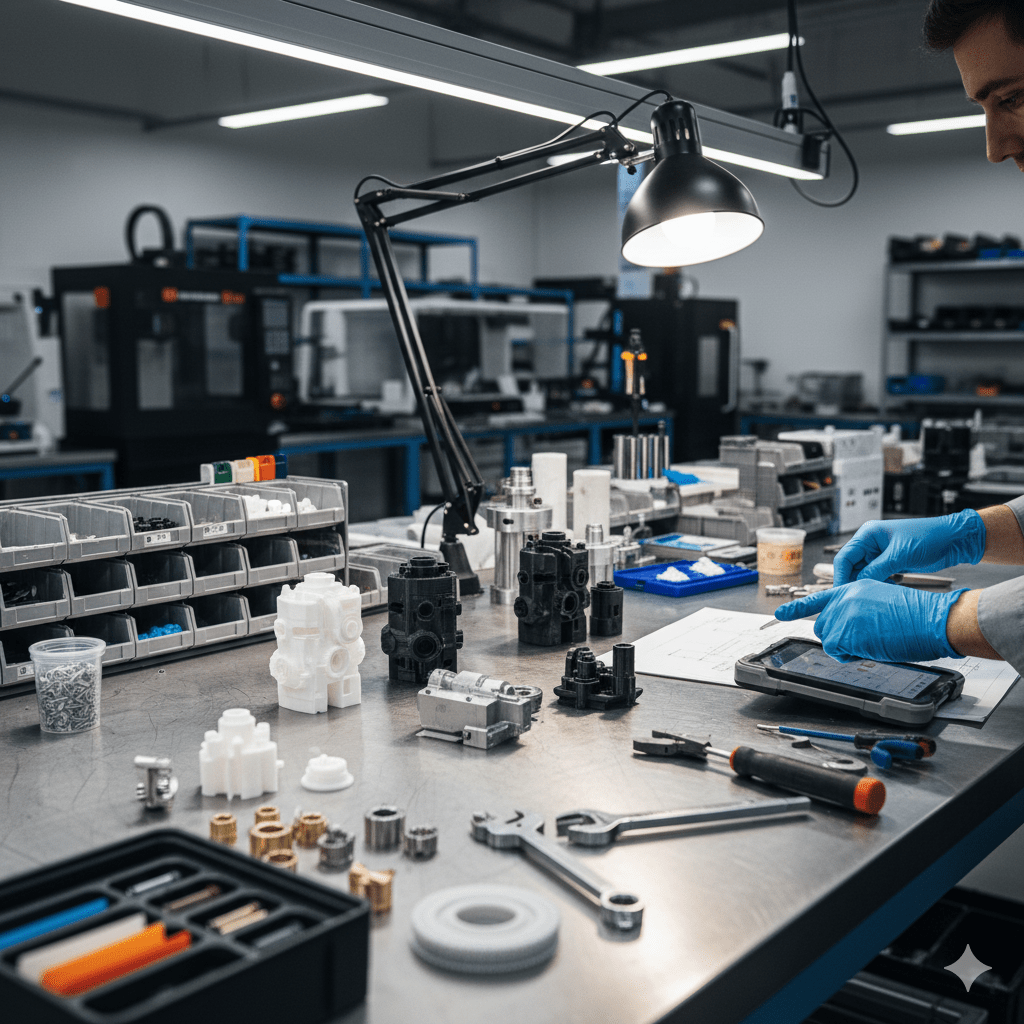
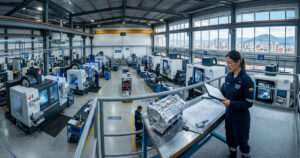
Phase 3: Functional Prototyping & Metrology Verification: Utilizing advanced 3D printing, rapid CNC tooling, and soft molds to manufacture physical, high-fidelity prototypes. These parts undergo rigid fit-test and functional stress testing on our metrology floor to confirm print compliance.
Phase 4: Tooling Engineering & Pilot Scale Production: Designing and manufacturing robust, high-volume production tooling, stamping dies, or welding fixtures, transitioning your project seamlessly into automated industrial scale.
Cross-Disciplinary Expertise: Optimizing Across Diverse Manufacturing Lines
Because Sumiparts is a fully integrated manufacturing powerhouse, our design department possesses direct, shop-floor expertise across a broad spectrum of production disciplines:
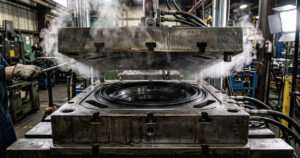
Plastic Injection Tooling Design: Expert implementation of uniform wall profiling, optimized gate positioning, slide-action mechanics, and conformal cooling circuits to drive down molding cycle times.
Sheet Metal & Fabrication Engineering: Calculating exact bend allowances, K-factors, and nested layouts to eliminate material waste during laser cutting and automated press brake forming.
Precision CNC Machining Layouts: Adjusting geometric profiles to maximize material removal rates (MRR), minimize required axis setups, and allow for standard cutting tool configurations.
The Design Phase – Conceptualizing Your Product
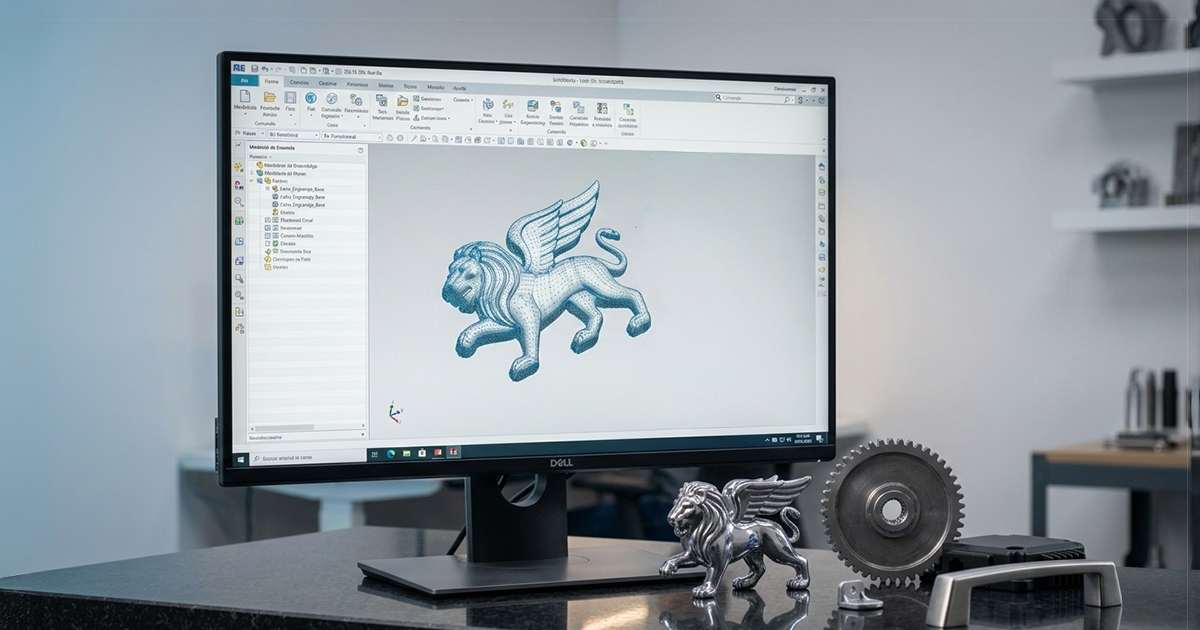
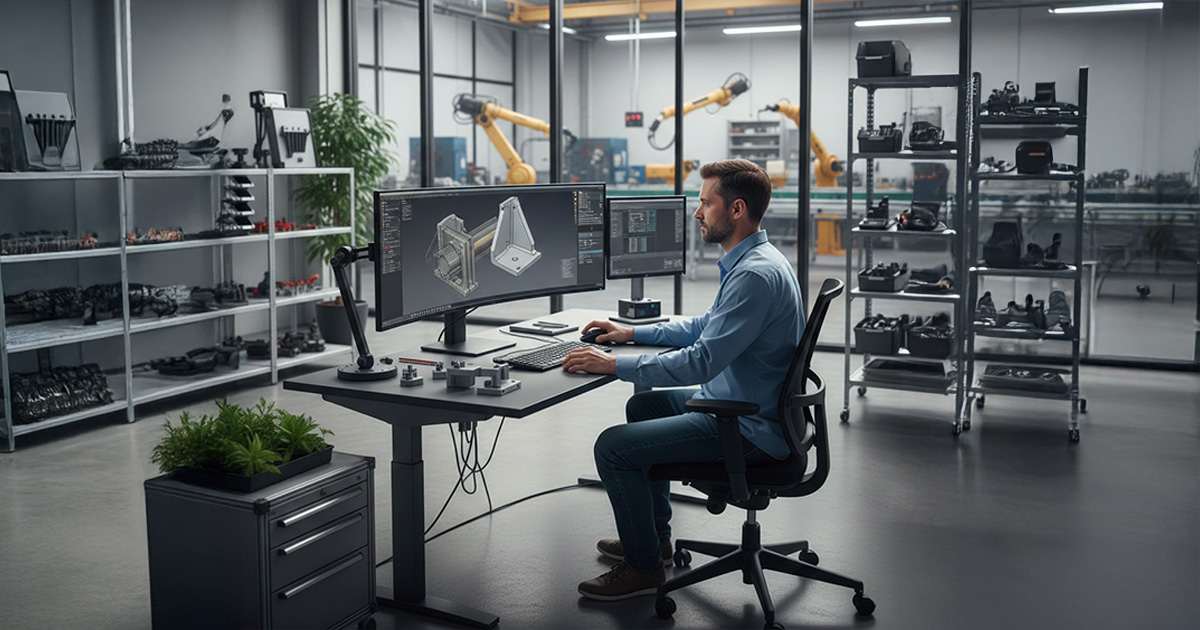
The first stage of design and development involves understanding the client’s requirements and translating them into a feasible concept. Engineers and designers collaborate to create 3D models, CAD drawings, and simulations that allow for virtual testing and visualization.
Key activities include:
-
Identifying functional requirements and constraints
-
Selecting materials and manufacturing methods
-
Generating preliminary sketches and CAD models
-
Performing virtual stress and performance simulations
This stage ensures that the product is technically viable, aesthetically appealing, and ready for prototyping.
Compress Your Engineering Timeline with Sumiparts
Sourcing custom industrial hardware requires a contract manufacturing partner that treats design development as a strict, data-driven science. Partnering with Sumiparts grants your product development and procurement teams access to advanced simulation software, deep polymer and metallurgical expertise, and a unified manufacturing pipeline optimized for the competitive North American market. Eliminate multi-vendor coordination errors and protect your intellectual property under one rigorous engineering framework. Contact our international design office today to upload your initial STEP files or engineering outlines to initiate a technical NPI review.
Prototype Development and Testing
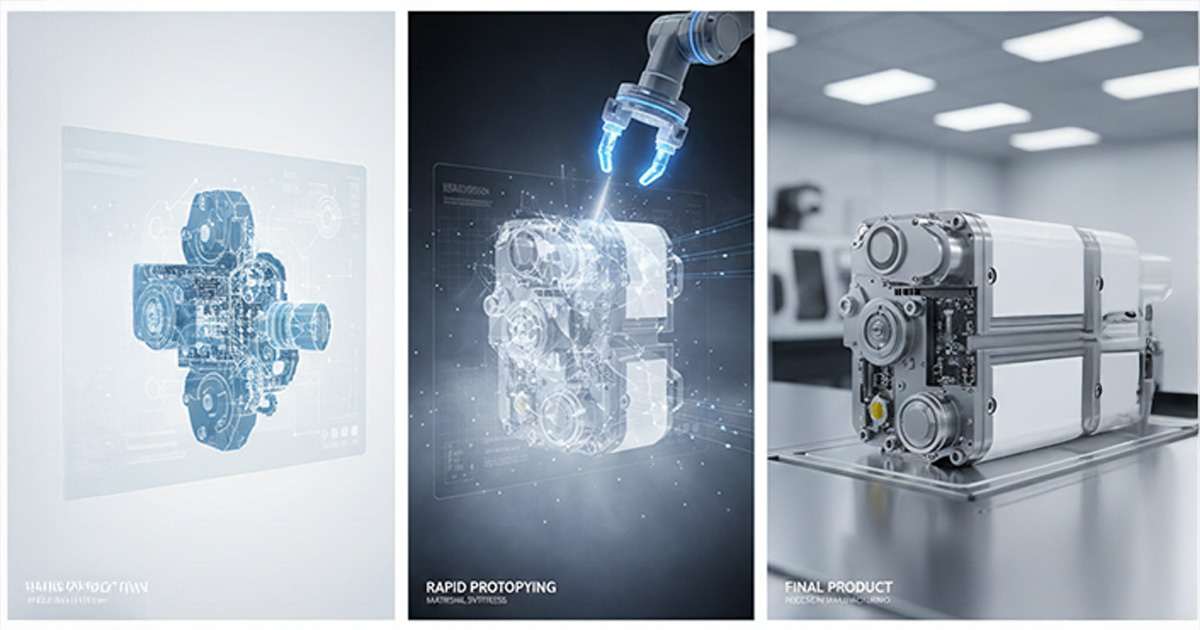
Once the initial design is approved, the development phase focuses on creating prototypes. Using technologies like 3D printing, CNC machining, or small-scale injection molding, prototypes allow engineers to:
-
Evaluate ergonomics and usability
-
Test mechanical performance and durability
-
Identify design flaws and areas for improvement
-
Validate material selection and tolerances
Prototyping reduces risk by providing tangible feedback before full-scale production, ensuring the final product is optimized for both performance and manufacturability.
Engineering and Industrial Implementation
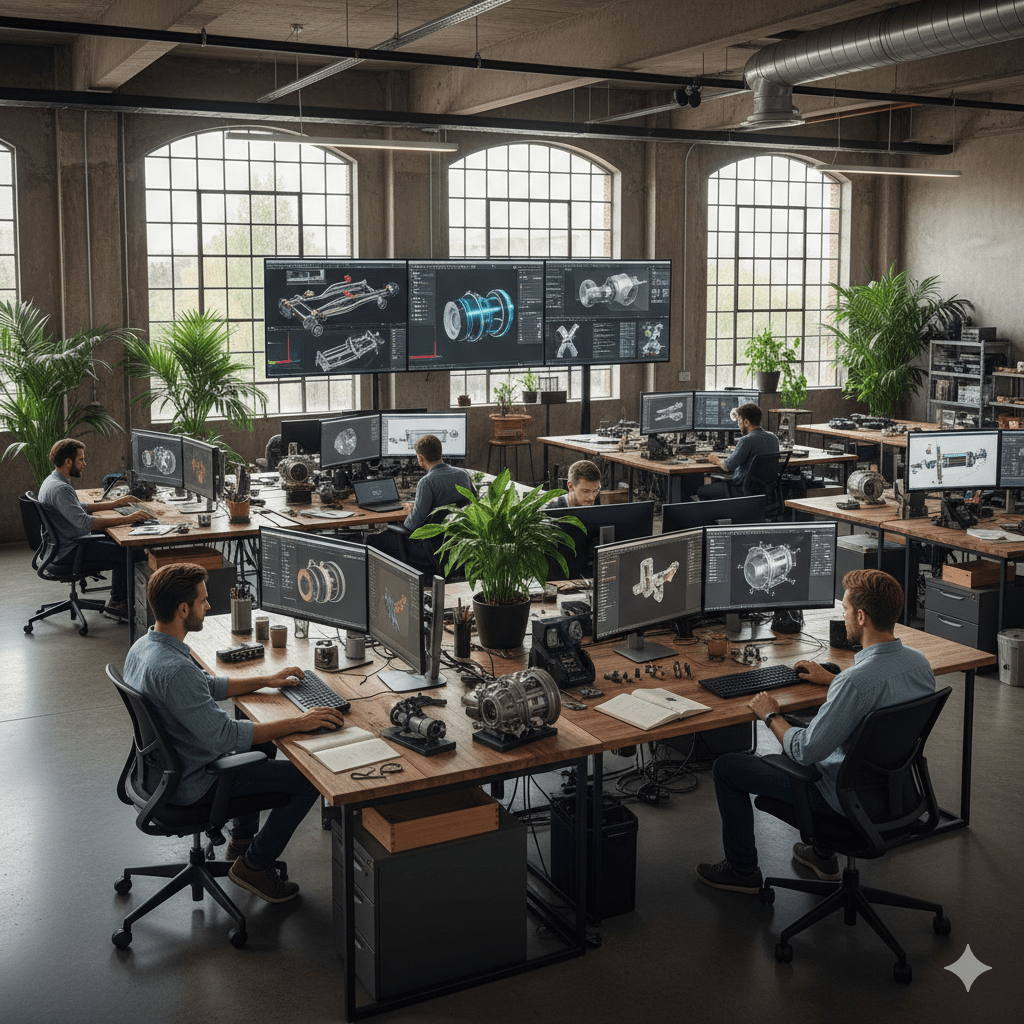
After prototyping, design and development moves to engineering and production planning. This phase involves:
-
Finalizing detailed CAD models for manufacturing
-
Designing molds, tooling, or fixtures
-
Preparing technical documentation for production teams
-
Integrating quality control measures to maintain consistency
Advanced simulation tools, CNC programming, and precise measurement technologies ensure that designs are replicable at industrial scale without compromising quality or functionality.
Benefits of Effective Design and Development
Investing in robust design and development processes offers multiple advantages:
-
Faster product development cycles
-
Reduced material waste and production costs
-
Enhanced product functionality and durability
-
Improved safety, usability, and aesthetics
-
Greater flexibility for customization and innovation
By combining engineering precision with creative design, companies can achieve products that are both high-performing and market-ready.
Applications Across Industries
Design and Development is used in a wide variety of sectors, including:
-
Automotive: Custom parts, dashboards, housings, and structural components
-
Electronics: Enclosures, connectors, and circuit board housings
-
Medical Devices: Ergonomic instruments, casings, and protective covers
-
Consumer Goods: Appliances, tools, packaging, and sports equipment
-
Industrial Machinery: Gears, brackets, protective shields, and assemblies
This versatility makes design and development an indispensable component of modern manufacturing.
Conclusion
Design and Development bridges the gap between concept and production, turning ideas into tangible, functional products. By leveraging CAD modeling, prototyping, engineering expertise, and industrial knowledge, companies can ensure that every component is optimized for performance, aesthetics, and manufacturability. Investing in this process guarantees quality, efficiency, and innovation across industries, from automotive and electronics to consumer goods and industrial machinery.
Focused on providing you with a specialized and professional design service for the creation of your ideas and followed by the manufacture of your products.
If you want to know more about the Design and Development service, at SUMIPARTS we are willing to collaborate with you. We want to provide you with the best services at your reach. Get in touch with us by calling Pbx: +57 748 22 13 Cel: 313 699 13 56 or by sending an email to info@sumiparts.com. Our technical team will be ready to assist you.


 English