
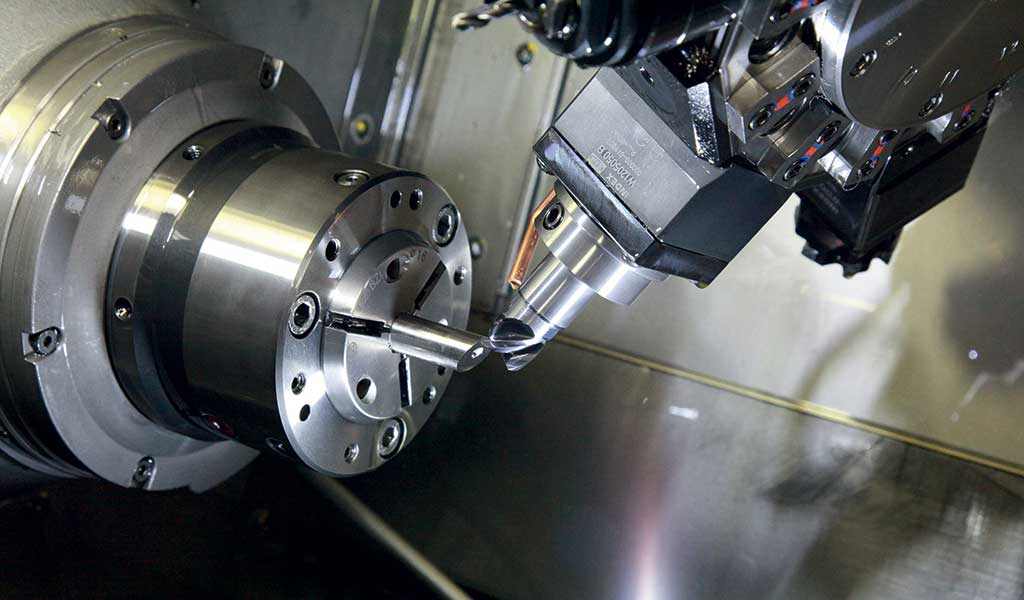
What Is CNC Machining?
Computer-controlled machining is a process used to shape materials into precise parts by removing excess material. Using automated mills, lathes, and drills, manufacturers can create complex components with minimal manual intervention.
This approach delivers consistent quality, high accuracy, and repeatability. It is widely applied in industries like aerospace, automotive, medical devices, and electronics, where precision and reliability are essential.
Advantages of Automated Machining
Automated machining technology offers several benefits:
Consistent dimensional accuracy across multiple components
Reduced setup times and fewer operator errors
Multi-axis operations in a single machine cycle
Smooth surface finishes and less need for secondary processing
These advantages make computer-guided machining ideal for both small-scale prototyping and full production runs, while minimizing material waste.
Materials Suitable for Precision CNC Machining
This process is compatible with a wide variety of materials:
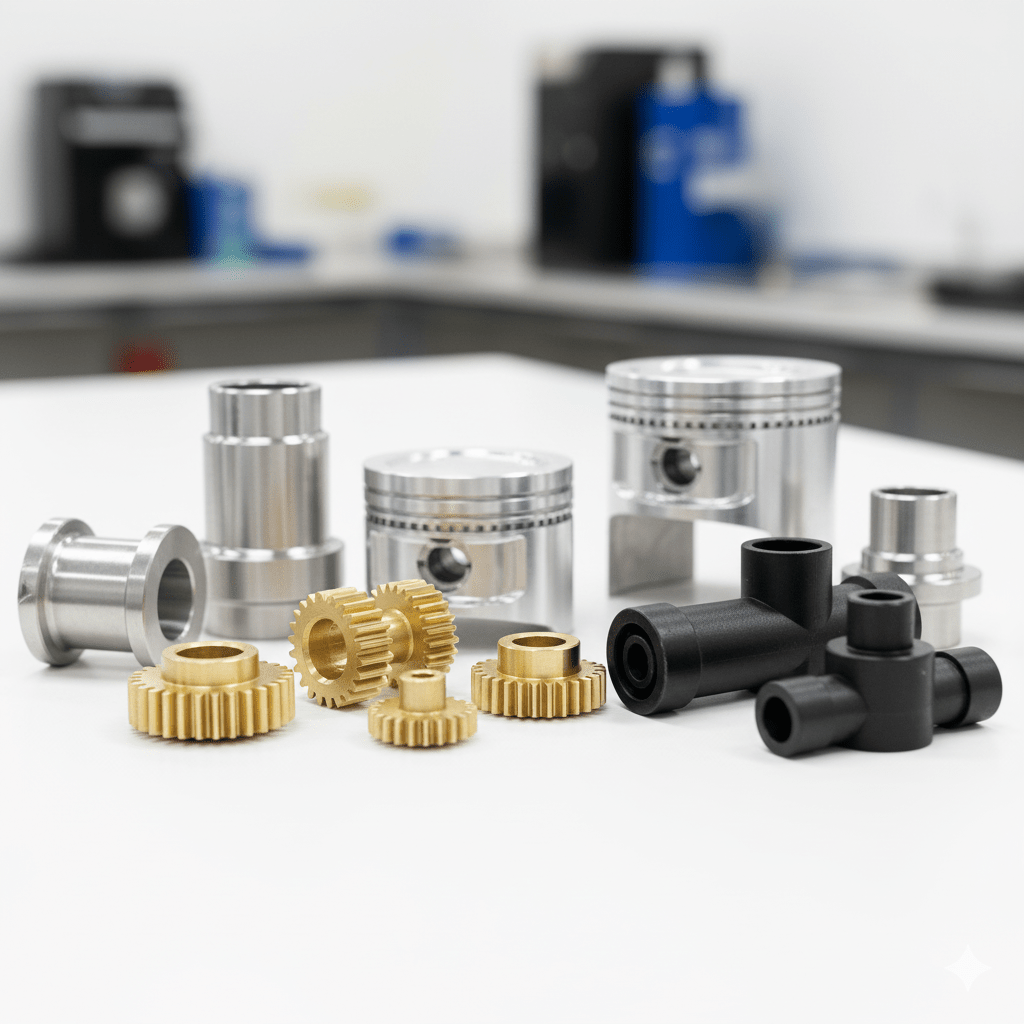
Metals: aluminum, steel, brass, titanium, stainless steel
Plastics: nylon, acrylic, PEEK, PTFE, Delrin
Composites: fiber-reinforced plastics and advanced polymer blends
Each material requires specific parameters for cutting, tool selection, and cooling to achieve precise tolerances and high-quality surfaces.
Applications in Industry
Precision machining is essential for producing:
Engine components and industrial machinery parts
Custom molds and precision fittings
Medical instruments and electronics housings
Integrating machining with processes like polishing, coating, or assembly ensures functional, durable, and visually refined parts suitable for industrial applications.
Future Developments
The next generation of automated machining combines robotics, AI-assisted programming, and hybrid additive-subtractive systems. These innovations improve productivity, reduce waste, and allow the creation of complex designs while maintaining accuracy and repeatability.
Such technological advances ensure that precision manufacturing remains a key part of modern industry.
CNC Machining Techniques and Operations
In modern manufacturing, CNC machining encompasses a variety of operations that allow precise shaping of materials. These include turning, milling, drilling, and grinding, all controlled through computer programming. Each operation is selected based on the part geometry, material type, and required tolerance.
Turning: Rotates the workpiece while a cutting tool removes material, ideal for cylindrical components.
Milling: Uses rotating tools to remove material from a stationary piece, creating complex surfaces or pockets.
Drilling: Produces holes with high precision, often integrated into multi-axis machining centers.
Grinding: Finishes surfaces to achieve tight tolerances and smooth textures.
By using CNC machining for these operations, manufacturers achieve repeatable accuracy and consistent quality, which is essential for high-demand industries.
Industries Relying on CNC Machining
The versatility of CNC machining makes it indispensable across many sectors:
Aerospace: Production of turbine components, brackets, and structural parts.
Automotive: Engine blocks, transmission parts, and custom accessories.
Medical: Surgical instruments, prosthetics, and implants.
Electronics: Enclosures, connectors, and heat sinks.
Industrial Machinery: Gears, shafts, and tooling components.
These industries demand CNC machining because it combines precision, efficiency, and the ability to handle both metals and high-performance polymers.
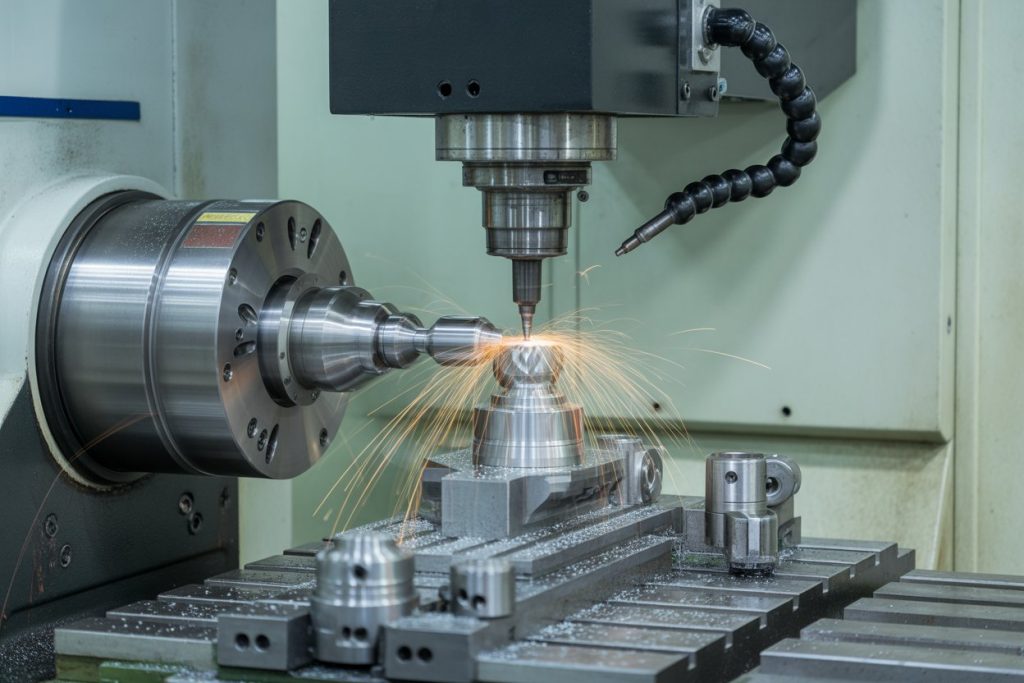
Best Practices for High-Quality CNC Machining
Achieving optimal results requires careful planning and execution:
Select the correct cutting tool and speed for the material.
Ensure proper fixture and workpiece alignment.
Monitor temperature and lubrication to prevent material deformation.
Validate CNC programs through simulation before production.
Inspect finished parts to ensure tolerances are met.
Following these practices ensures that CNC machining delivers durable, functional, and accurate components suitable for any application.
The Future of CNC Machining
Advancements in CNC machining continue to push the boundaries of manufacturing:
Robotics and automation integrate with CNC centers for continuous production.
AI-assisted programming predicts tool wear and optimizes cutting paths.
Hybrid systems combine additive and subtractive methods for complex geometries.
Sustainable machining reduces energy consumption and material waste.
As these innovations evolve, CNC machining will remain at the heart of modern production, capable of producing high-quality parts for increasingly demanding industries.



 Español de Colombia
  English