
Safety in public and private infrastructure depends on the quality of its components. Today, road signaling manufacturers face the challenge of creating environments that not only guide vehicular traffic but also ensure the safe mobility of all citizens. At Sumiparts, we specialize in the production of podotactile flooring, an essential element of tactile signaling that allows visually impaired individuals to navigate independently and safely.
As leaders in polymer transformation, we understand that road signaling must be infallible, durable, and easy to implement under universal accessibility standards (ISO and local regulations).
The Science of Podotactile Flooring Signaling
Podotactile flooring works through two distinct patterns recognized globally by accessibility standards such as the Americans with Disabilities Act (ADA):
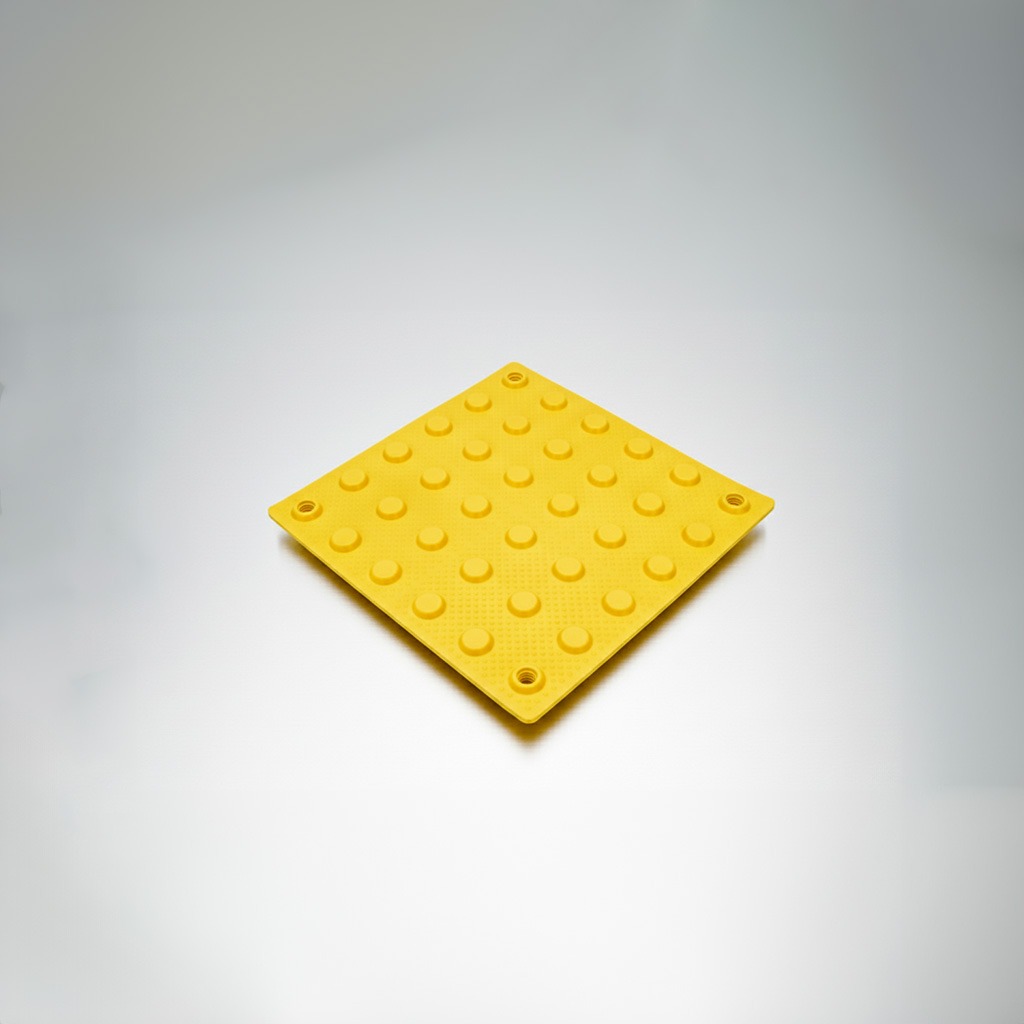
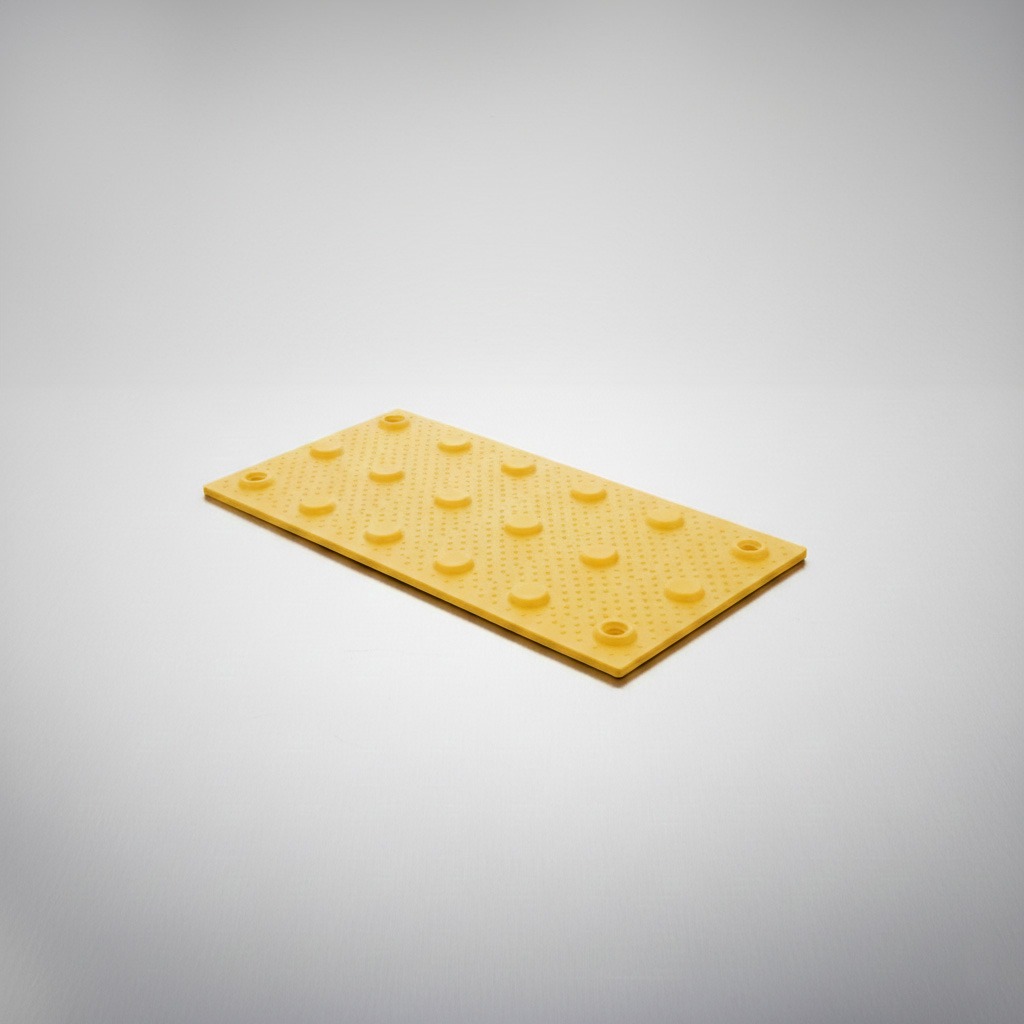
Warning Patterns (Truncated Domes): These raised studs alert pedestrians to an upcoming hazard. Their specific height and spacing are engineered to be felt through the soles of shoes or detected by a white cane, providing an unmistakable “stop” or “caution” signal.
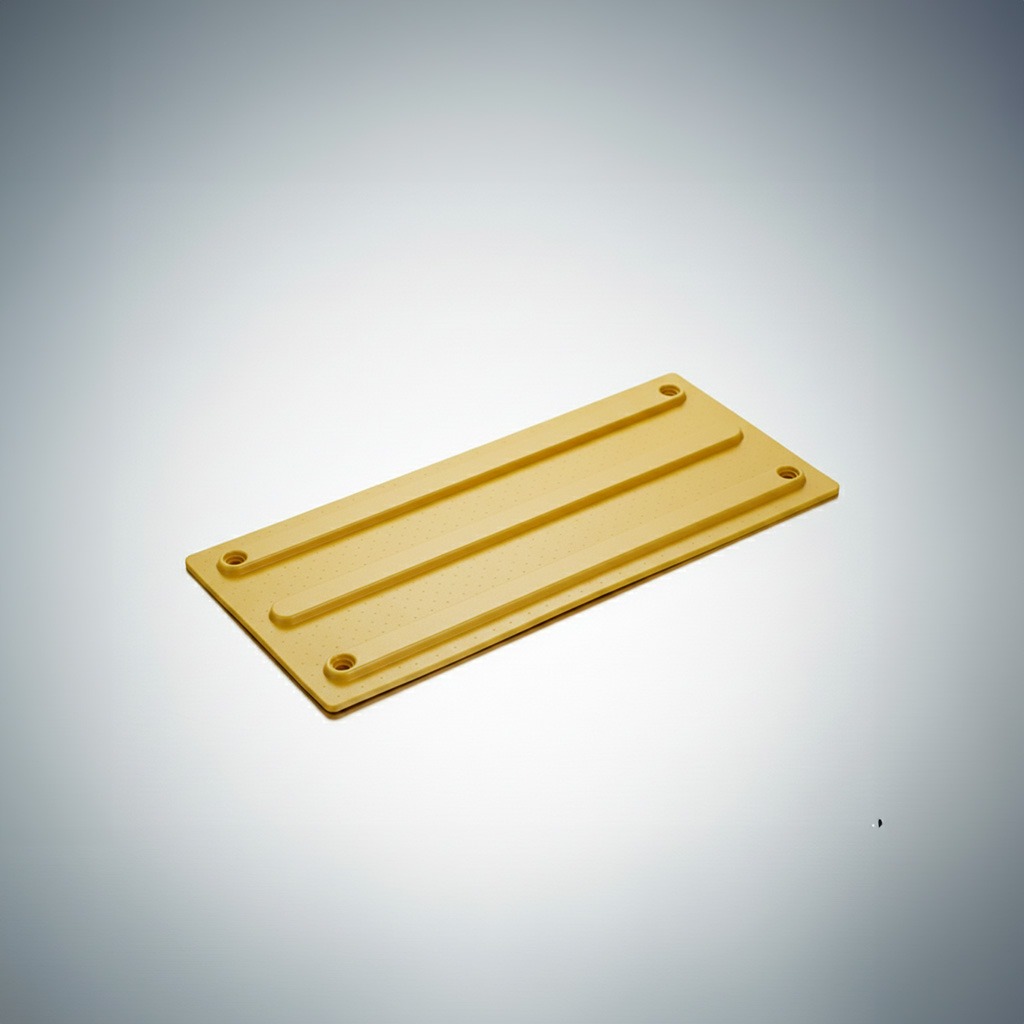
Directional Patterns (Linear Grooves): These elongated bars act as a tactile path, guiding pedestrians along a safe route through large open spaces or toward specific transit points.
Why Choose Podotactil Flooring Specialized in Polymers?
Traditionally, tactile signaling was limited to concrete or costly metals. However, Sumiparts engineering has proven that the use of high-impact PVC and TPU offers competitive advantages that conventional road signaling manufacturers cannot match:
Chromatic Consistency: The “Traffic Yellow” color is molecularly integrated through plastic injection, ensuring the signaling does not fade under the sun or with heavy use.
Geometric Precision: Our high-precision molds guarantee that every warning stud and directional bar has the exact dimensions required by law for detection by canes or footwear.
Mechanical Resilience: Unlike concrete, which cracks over time, our podotactile flooring absorbs impacts and vibrations without fracturing.
Technical Properties and Materials Podotactile Flooring:
As road signaling manufacturers, we focus our production on the following technical specifications:
High-Impact Engineering PVC: A base material that combines flexibility to adapt to slight ground irregularities with the hardness to withstand intense pedestrian traffic.
Anti-Slip Surface: Designed with micro-grip textures that prevent slips even in rainy conditions, exceeding the friction requirements of road regulations.
Chemical and Thermal Resistance: Immunity to hydrocarbons, de-icing salts, and extreme thermal fluctuations, maintaining the dimensional stability of the floor.
High-Performance Anchoring System: Designed to be fixed with industrial-grade chemical adhesives, ensuring the piece becomes an integral part of the substrate.
Low Transition Profile: Beveled edges that eliminate tripping hazards for pedestrians with reduced mobility or wheelchair users.
The Impact of Podotactile Flooring on Modern Urbanism
The work of road signaling manufacturers is fundamental in projects such as:
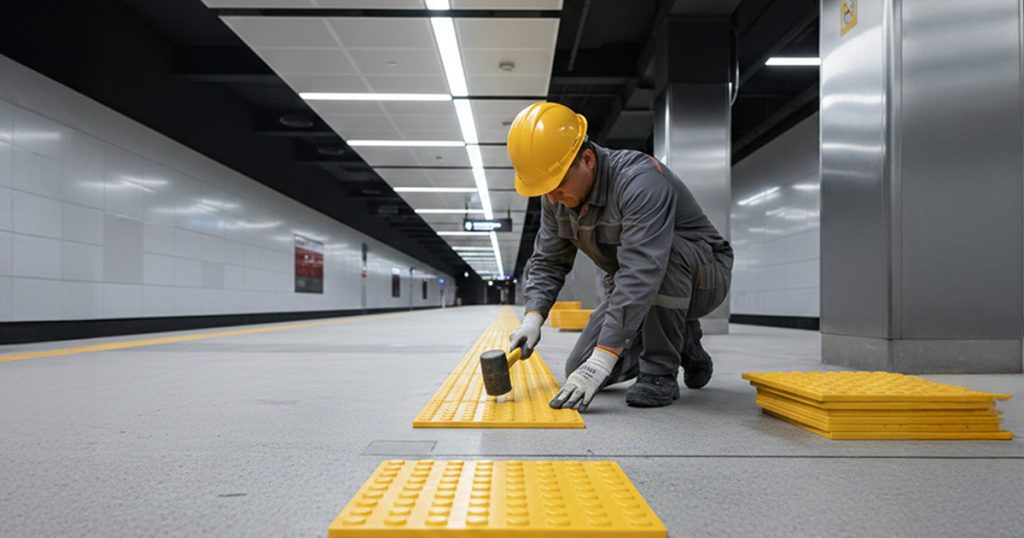
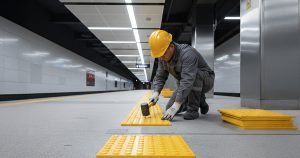
Mass Transit Stations: Demarcating platform edges to prevent falls onto tracks.
Pedestrian Crossings and Intersections: Warning about the start of the vehicular roadway.
Shopping Centers and Public Buildings: Guiding from main entrances to service points or elevators.
Bike Lanes and Parks: Tactile separation between high-speed zones and pedestrian areas.
Advantages of Partnering with Sumiparts as a Direct Manufacturer
By choosing us among road signaling manufacturers, you receive:
Scalability: Capacity to respond to high-volume infrastructure projects.
Technical Advisory: Support in selecting the right adhesive and installation method based on the surface type.
Quality Certification: Products tested under rigorous wear-resistance and traction controls.
The road signaling of the future is tactile, visible, and inclusive. Being road signaling manufacturers involves a responsibility to public safety that Sumiparts fulfills through excellence in podotactile flooring manufacturing. By integrating engineering materials and optimized production processes, we deliver solutions that not only meet the standards but transform infrastructure into an accessible space for everyone.
Engineering for the Modern Roadway
Road signaling components are subjected to extreme environmental stress, including UV radiation, temperature fluctuations, and heavy mechanical loads from maintenance vehicles. At Sumiparts, our manufacturing process focuses on three core performance factors:
High Chromatic Contrast: Safety signaling requires permanent, vibrant colors (standard Federal Yellow, Brick Red, or Charcoal). By integrating pigments during the injection molding process, we ensure the color remains consistent throughout the material’s thickness, preventing fading or chipping.
Slip Resistance: Our flooring features a micro-textured surface on the domes themselves. This provides a high coefficient of friction, ensuring that the safety feature does not become a slip hazard during rain or snow.
Structural Resilience: Using high-impact polymer blends, we create tiles that resist cracking under the pressure of snowplows or heavy pedestrian surges in transit hubs.
Applications in Urban Infrastructure
Our road signaling and podotactile solutions are designed for rapid deployment in high-stakes environments:
Pedestrian Crosswalks & Curb Ramps: Providing clear boundaries between sidewalks and vehicular traffic.
Public Transit Platforms: Signaling the “danger zone” at the edge of subway and light rail platforms.
Commercial Building Entrances: Ensuring inclusive access to shopping centers and office complexes.
Multi-Modal Transit Hubs: Guiding travelers safely through complex terminals.
Learn More...
Want to learn more about our podotactile flooring? SUMIPARTS is dedicated to serving you. We strive to bring the best solutions directly to you, whenever you need them. Reach out to us via PBX at + 57 601 748 22 13, call us at +57 313 699 13 56, or email us at info@sumiparts.us. Our team is eager to provide the support you deserve.



 English