
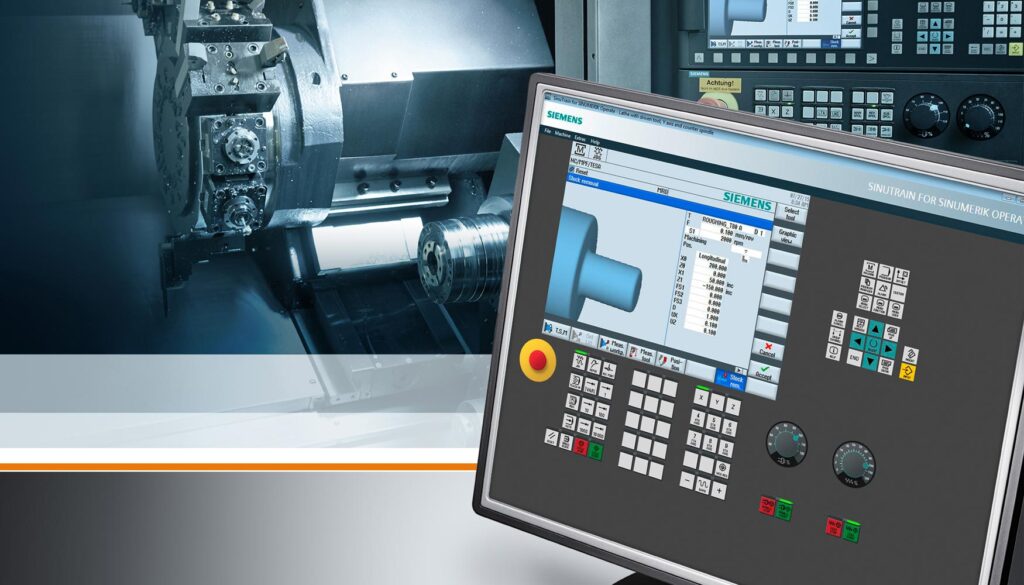
Expert CNC Machining Planning and Production at Sumiparts SAS
The production of a CNC machined component is carried out in a specialized facility, like Sumiparts SAS, equipped with advanced machinery, skilled operators, and high-quality materials.
Effective CNC machining planning goes beyond simply placing a piece and operating a control panel; it requires careful study and process planning in advance. Operators must have deep knowledge of CNC processes, machine capabilities, and operational variables to ensure the highest quality results.
Stages of CNC Machining Planning
Product Listing and Production Scheduling: Identify the products to be manufactured, delivery deadlines, and quantities.
Order Planning: Define materials, supplies, subcontracted components, and workforce requirements.
Capacity Programming: Schedule machine time, sequence tasks, and minimize downtime to meet production goals.
Process Planning: Detail the steps required for each component, estimating cycle times and deadlines for different batches.
Operation Documentation: Create process sheets and operation cards including quality controls, timings, and specifications for each step.
Before starting production, it is essential to assess the feasibility of manufacturing the piece according to the drawing specifications. This includes a study of available processes, tooling, and plant capacity, as well as ensuring all quality control instruments are ready.
Key Steps in CNC Machining Analysis
Numbering the surfaces to be machined: Each surface of the component is carefully identified and labeled to ensure that every area is properly addressed during the CNC machining process. This step helps prevent errors and ensures that all critical surfaces are machined according to the design specifications.
Analyzing surface characteristics: Operators evaluate the texture, hardness, and finish requirements of each surface. This analysis determines the cutting tools, feeds, and speeds to use, ensuring the best surface quality, dimensional accuracy, and durability of the machined component.
Evaluating the preform requirements: Before machining begins, the raw material or preform is inspected to confirm that it meets the dimensional, material, and structural specifications necessary for accurate machining. This ensures that the final component adheres to tolerance limits and reduces the risk of defects or material waste.
Reviewing all remaining technical specifications: The engineering team carefully reviews drawings, tolerances, and process instructions to verify that all aspects of the design are feasible with the available machines and tools. This step guarantees that every operation in the CNC machining process is properly planned and executed, maintaining consistency, efficiency, and high-quality production standards.
By following these steps, Sumiparts SAS ensures that each component undergoes a thorough preparation and analysis, reducing errors, optimizing material use, and achieving the highest level of precision and reliability in CNC machined parts.
CNC Machining Execution
Once the CNC machining planning process sheet is ready, a manufacturing order authorizes the workshop team to begin production. It details product descriptions, material requirements, tooling, and labor allocation, ensuring that each step of the CNC machining process is clearly defined and fully traceable. This careful CNC machining planning is essential for maintaining consistency, efficiency, and high-quality standards across all production batches of CNC machined components.
The CNC program is then carefully entered into the machine controller, containing all necessary geometric, technological, and machining parameters. The program is structured in blocks using ISO code, which precisely controls the relative movement of the cutting tool and workpiece, guaranteeing the accurate execution of every operation, whether it involves CNC milling, CNC drilling, CNC turning, or multi-axis machining. Proper CNC machining planning ensures that each operation achieves high precision and surface quality.
During CNC machining, operators continuously monitor the process, verifying that feed rates, spindle speeds, and tool paths match the programmed instructions. Adjustments are made as needed to maintain dimensional accuracy, part integrity, and optimal surface finish, especially for complex components or tight-tolerance CNC projects. This careful monitoring is part of effective CNC machining planning.
After machining, parts undergo a thorough quality inspection, including dimensional checks, surface finish verification, and material property tests. Any deviations are documented and corrected to ensure the final product meets all engineering specifications, client requirements, and CNC manufacturing standards.
Finally, the completed components are prepared for post-processing, assembly, or finishing operations, depending on the project. The integration of rigorous CNC machining planning, precise programming, and continuous process monitoring ensures that Sumiparts SAS consistently delivers high-performance, reliable, and fully compliant CNC machined parts to clients in the industrial, automotive, aerospace, and engineering sectors.
Why Choose Sumiparts SAS
At Sumiparts SAS, we follow a rigorous CNC machining planning protocol, ensuring that every machined component meets the highest standards of quality, precision, and functionality.
Our team is ready to collaborate on your projects, providing tailored solutions, expert guidance, and reliable manufacturing processes. Contact us:
Tel: +57 748 22 13
Mobile: (+57) 313 699 13 56
Email: sales@sumiparts.us
Our technical team is fully prepared to assist you and ensure your CNC machined components achieve optimal performance.
.


 Español de Colombia
  English