
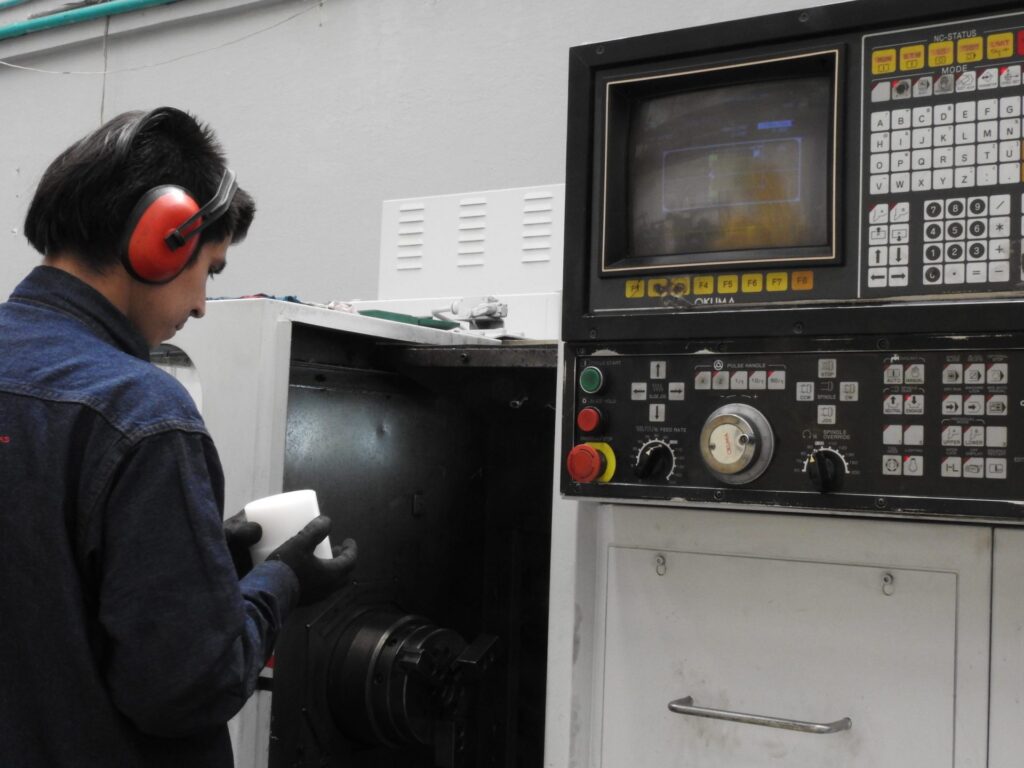
Understanding Teflon Turning
Known commercially as PTFE (Polytetrafluoroethylene), Teflon is a polymer valued for its low friction, heat resistance, and chemical stability. In industrial machining, Teflon turning refers to the process of shaping this material on CNC lathes to produce precise, high-quality components.
Because of its smooth texture and dimensional stability, PTFE can be turned into seals, bushings, or insulating elements that meet demanding operational standards. This makes it a preferred option across sectors such as automotive, electronics, and chemical processing.
Key Properties That Make Teflon Ideal for Turning
The outstanding machinability of PTFE comes from its non-stick surface and molecular uniformity. Unlike harder polymers, it allows clean cuts with minimal tool wear. It also resists moisture absorption and maintains structural integrity under temperature swings up to 260 °C.
When properly machined, the resulting parts feature excellent finishes and minimal friction. These attributes help manufacturers achieve tight tolerances without extensive post-processing — saving both time and material.
The Teflon Turning Process Explained
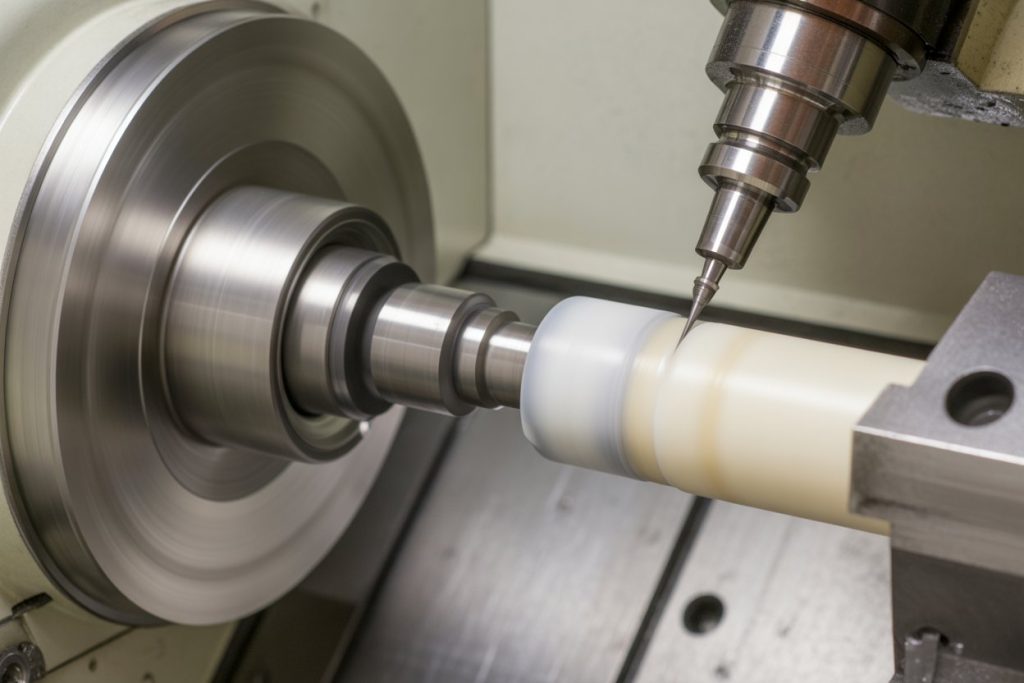
The turning process starts with cylindrical PTFE bars or billets mounted on a CNC lathe. Precision tools remove layers gradually to shape the desired geometry. Because the material is soft and flexible, machinists use sharp edges, moderate speeds, and controlled feed rates to prevent deformation.
Cooling fluids are seldom necessary since PTFE handles heat well, though chip control remains vital to avoid wrapping around the workpiece. After cutting, parts may be lightly polished or trimmed for perfect symmetry and dimensional accuracy.
Common Applications of Teflon-Turned Components
PTFE-turned components appear in a wide range of environments where reliability and resistance are essential. Some of the most common uses include:
-
Sealing systems for pumps and valves
-
Bearings and bushings in low-friction assemblies
-
Electrical insulators in high-voltage equipment
-
Food-grade elements where cleanliness is critical
Each application benefits from PTFE’s stability, ensuring consistent performance even under mechanical stress or chemical exposure.
Benefits and Real-World Advantages
Manufacturers choose PTFE turning for its ideal balance between performance, cost efficiency, and design flexibility. Beyond being easy to machine, this material offers a combination of physical and chemical properties that make it highly dependable across industrial applications.
The main advantages include:
-
Outstanding chemical and thermal resistance, ensuring reliable operation even in corrosive or high-temperature environments. PTFE components maintain their structure and function where other plastics or metals may degrade.
-
Smooth, non-stick surfaces that significantly reduce friction, particle buildup, and contamination. This is particularly valuable in cleanroom, medical, and food-processing applications.
-
Lightweight construction compared to metal alternatives, helping lower equipment weight and energy consumption while maintaining mechanical integrity.
-
High precision achievable through CNC control, enabling complex geometries and tight tolerances suitable for sealing, insulation, and motion-control systems.
-
Extended service life with minimal maintenance, as PTFE parts resist wear, corrosion, and deformation over long operating cycles.
These combined benefits make Teflon machining a practical and reliable solution for manufacturers seeking to enhance durability, safety, and efficiency in modern production systems. Its consistent performance under stress allows engineers to design parts that remain stable, even when exposed to continuous mechanical load or extreme environmental conditions.
Conclusion and Next Steps
Combining advanced CNC techniques with PTFE’s inherent qualities results in durable, high-precision components suited for the most demanding industries. Its adaptability and clean surface finish make it indispensable in both technical and commercial settings, from sealing systems to electrical insulation.
Beyond performance, Teflon machining also contributes to greater production efficiency — its low friction reduces energy consumption and wear on surrounding parts, extending the lifespan of entire assemblies. In industries where downtime can be costly, using precision-turned PTFE components helps maintain consistent operation and reliability.
To achieve the best results, it’s crucial to collaborate with a machining partner experienced in polymer behavior, capable of selecting the right cutting tools, speeds, and feeds. Such expertise ensures that every piece — from prototype to final production — meets strict dimensional and surface-quality standards.
By combining material science with precision engineering, Teflon turning continues to redefine what’s possible in modern industrial manufacturing — offering a balance of performance, longevity, and versatility that few materials can match.
If you’d like to learn more about our Teflon Turning service, SUMIPARTS is happy to assist you. We want to provide you with the best services at your fingertips.
Contact us by calling +57 748 22 13, mobile (+57) 313 699 13 56, or by emailing info@sumiparts.us. Our technical team will be ready to help you.

 English
  Español de Colombia