Injection molding applied to safer and more durable educational environments
Comparte esta información en:
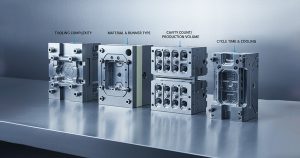
Injection molding supports the creation of safe and durable educational environments by manufacturing technical plastic components designed for intensive daily use.
What is injection molding?
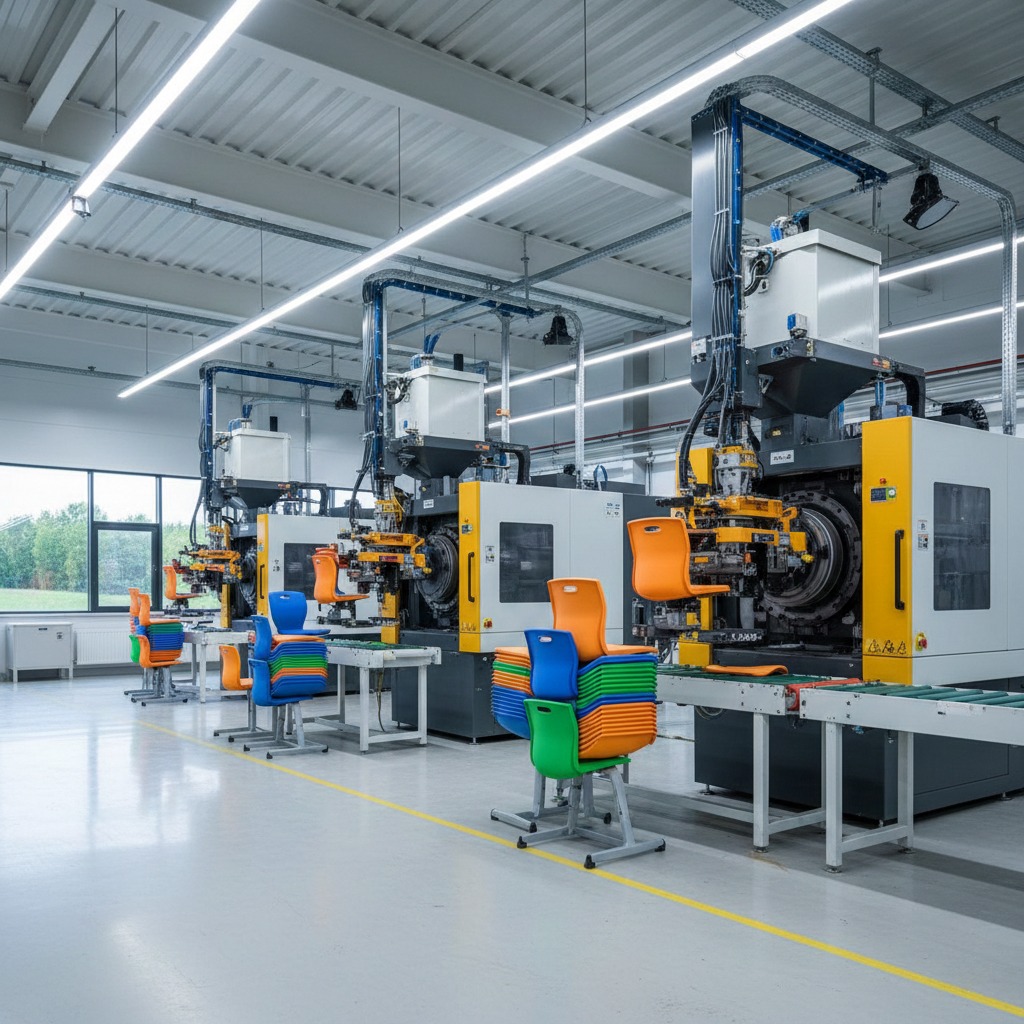
Is an industrial manufacturing process in which thermoplastic materials are heated to a molten state and injected into precision-engineered molds. Once cooled, the material solidifies into a component with defined geometry and surface characteristics.
This process allows for the production of complex, repeatable parts with integrated features such as rounded edges, reinforced zones, and fastening elements. These characteristics make injection molding particularly suitable for applications where safety and durability are essential.
The role of injection molding in educational infrastructure
Educational infrastructure must balance functionality, safety, and cost efficiency. This manufacturing solution supports this balance by enabling large-scale production of standardized components.
Its role includes:
Manufacturing components with smooth, safe geometries
Producing parts resistant to impact and wear
Ensuring dimensional consistency across installations
Reducing maintenance through durable materials
By relying on injection molding, educational facilities can implement solutions designed for long-term performance.
Applications in educational environments
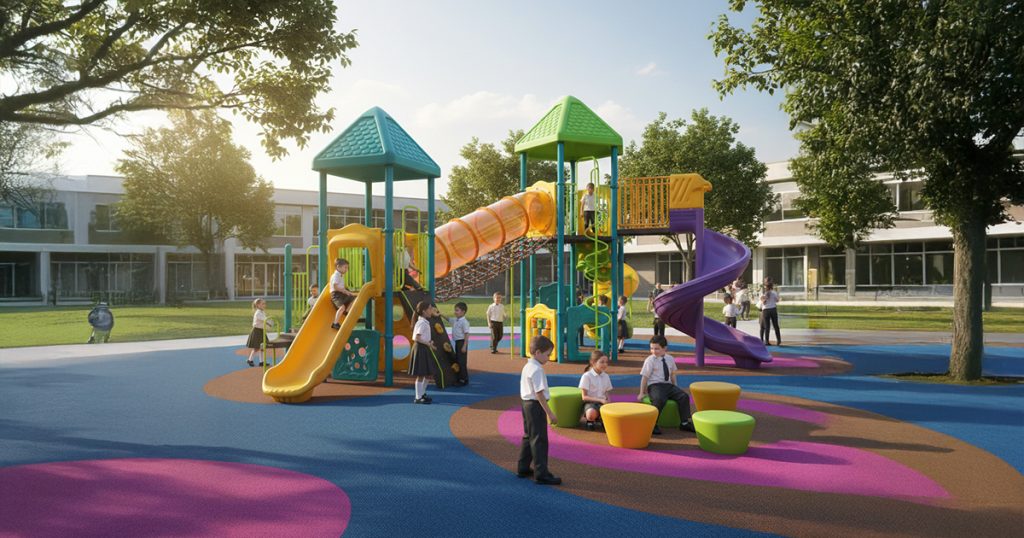
injection molding
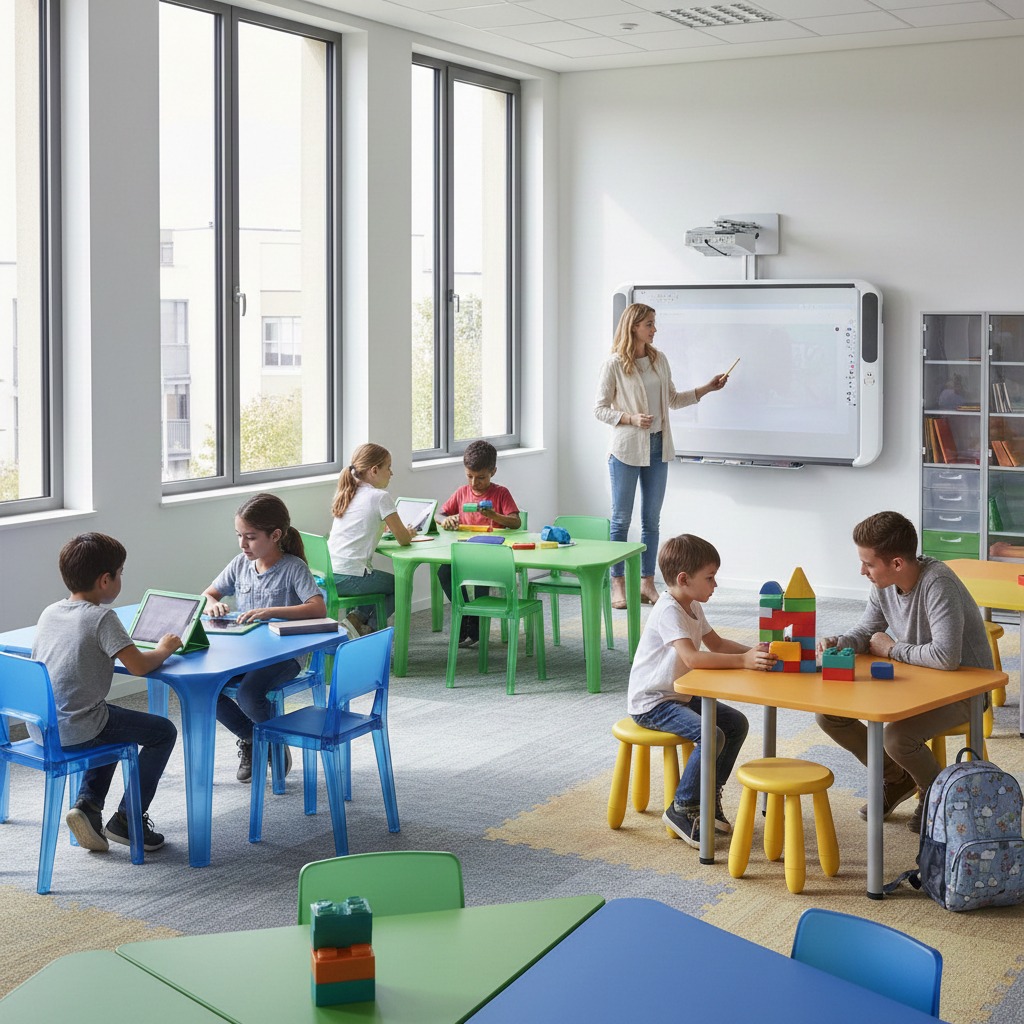
injection molding
Educational environments require materials that support regular cleaning and maintenance. This manufacturing method allows for smooth surface finishes that reduce dirt accumulation and facilitate sanitation.
Common applications include:
Classroom furniture components
Laboratory equipment housings
Electrical enclosures and cable management systems
Protective covers and safety accessories
Storage and organizational systems
Each application benefits from the precision and repeatability of injection molding, ensuring consistent quality across multiple facilities.
Materials used for educational applications
A variety of thermoplastics can be processed through this forming technique, depending on the specific application and performance requirements.
Polyethylene (PE) for flexible and impact-resistant components
Polycarbonate (PC) for transparent and high-strength parts
Engineering plastics for demanding applications
Material choice directly affects the durability and safety of injection molding components.
Hygiene, maintenance, and long-term durability
Educational environments require materials that support regular cleaning and maintenance. This manufacturing method allows for smooth surface finishes that reduce dirt accumulation and facilitate sanitation.
Additionally, injection molded components:
Resist moisture and cleaning chemicals
Maintain structural integrity over time
Reduce the need for frequent replacement
These characteristics contribute to the long-term durability of educational infrastructure.
Sumiparts S.A.S
Déjanos un comentario
WhatsApp:
+57 313 699 13 56
Get in touch:
About Sumiparts S.A.S.
At SUMIPARTS S.A.S. We believe that your projects have to come true. We work together to provide technologies, tools and offer our best skills for the creation of our customer plans.


 English
  Español de Colombia