
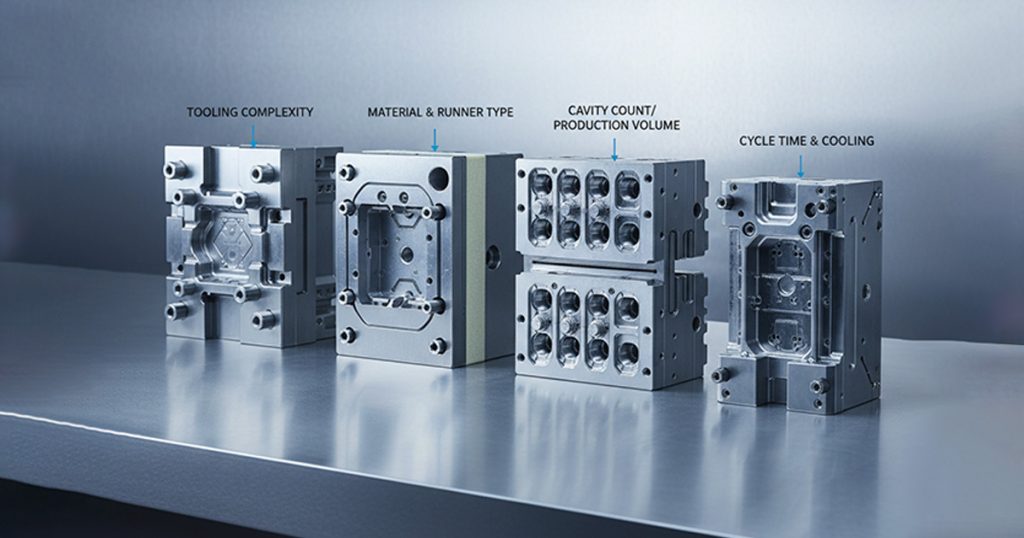
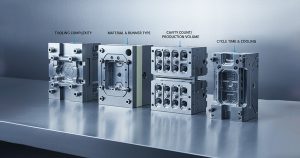
The creation of high-precision injection molds is one of the most complex disciplines in mechanical engineering. It is not just about creating a cavity in the shape of the part; it is about designing a thermal and mechanical reactor that must open and close thousands of times with a deviation of less than 0.01 mm. At Sumiparts, we combine advanced simulation software with state-of-the-art manufacturing processes to deliver tooling that guarantees our clients’ competitiveness.
1. Design: Detailed Engineering and Flow
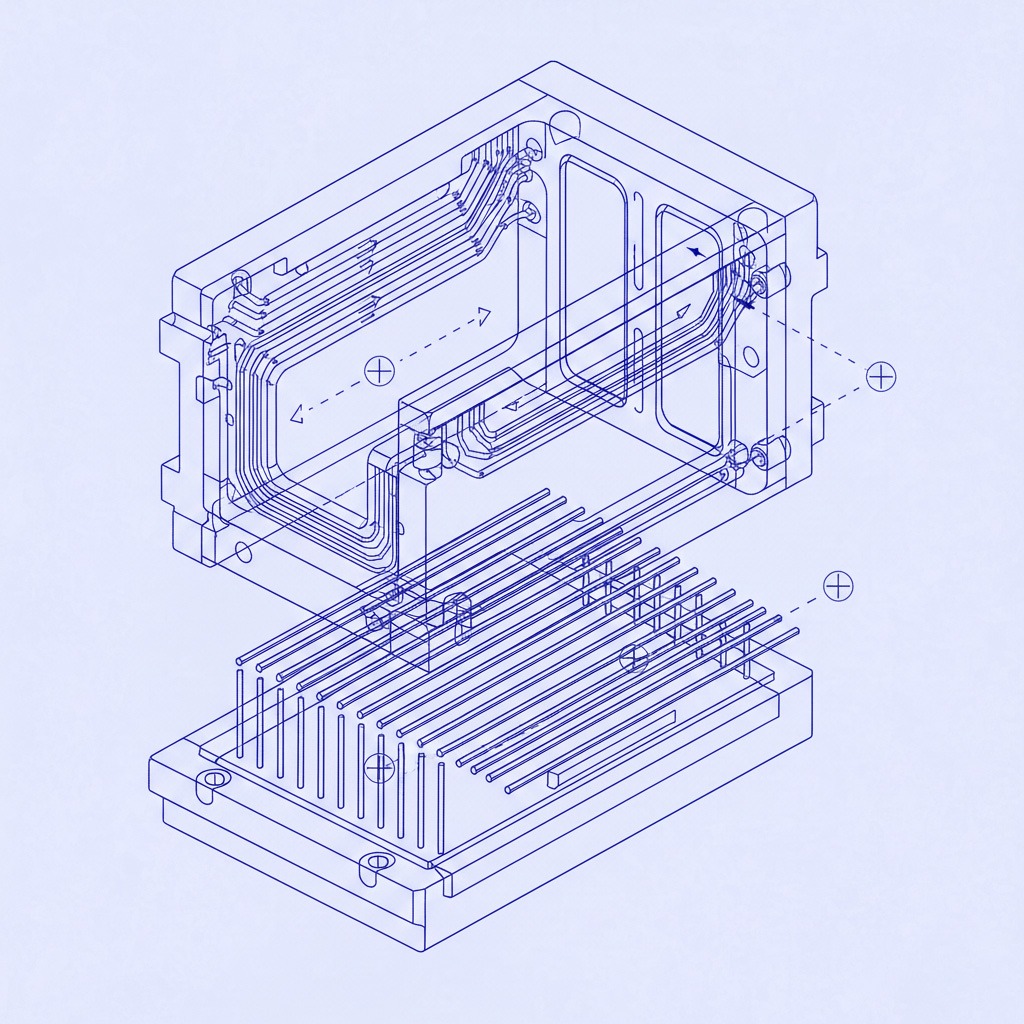
The success of injection molds starts in the digital environment. A robust design must include:
Fill Analysis (Moldflow): Simulation of molten polymer behavior to predict air traps, weld lines, and high-pressure points.
Venting Systems: Strategic channels for gas evacuation to prevent the “Diesel effect” (burn marks on the part).
Mold Kinematics: Design of slides, collapsible cores, and automatic unscrewing systems for complex geometries.
2. Material Selection and Treatments
The durability of injection molds depends on the base steel. At Sumiparts, we select materials based on production volume and resin type:
High-Production Steels (Class 101): H13 or S7 type steels, heat-treated to reach hardness levels of 50-54 HRC, ideal for millions of cycles.
Steels for Corrosive Resins: 420 series stainless steels, which resist chemical attack from materials like PVC or POM.
Surface Treatments: PVD coatings or Nitriding to reduce friction in moving parts and improve de-molding.
3. Manufacturing: Precision in Every Micron
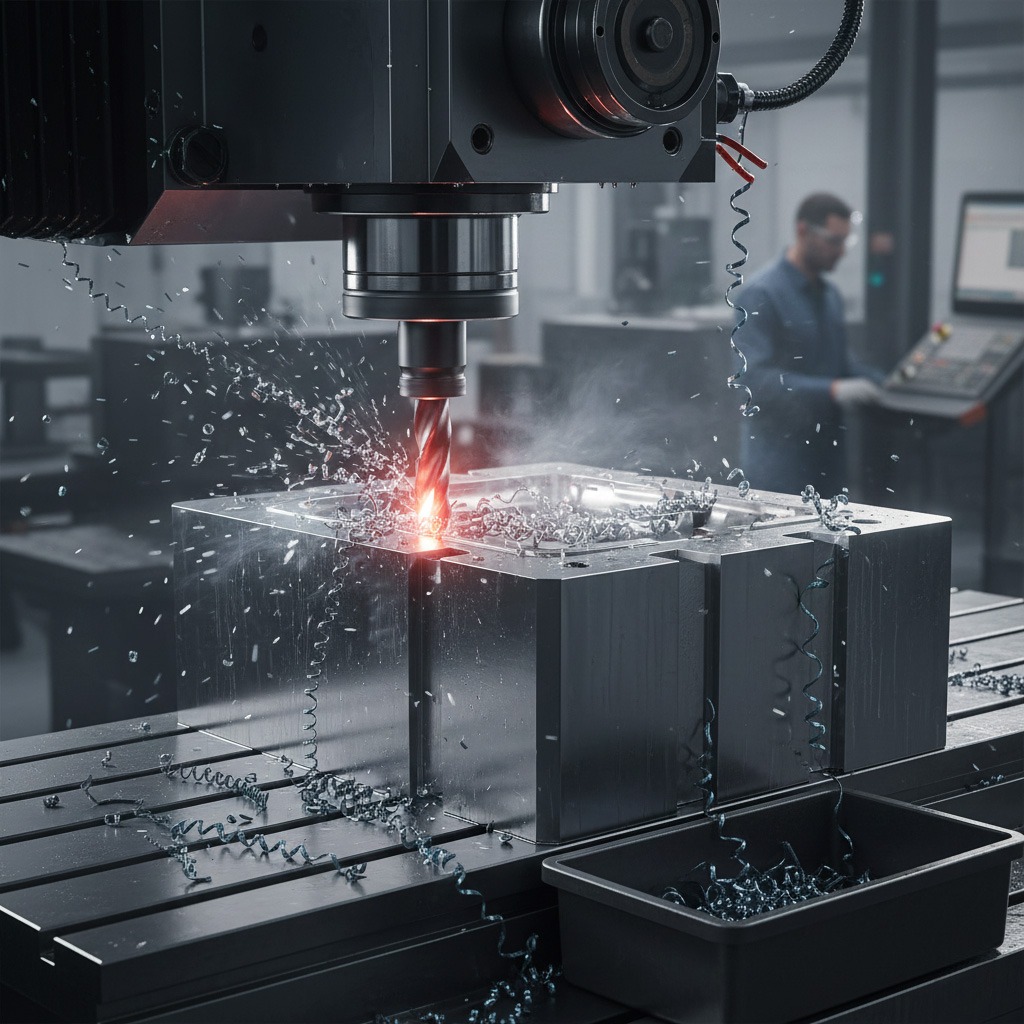
The physical execution of injection molds requires the integration of subtractive and electrical technologies:
High-Speed CNC Machining (HSM): Allows for surface finishes so fine they drastically reduce manual polishing time.
Electrical Discharge Machining (EDM): Essential for creating deep ribs, sharp corners, and technical textures in hardened steel.
Precision Grinding: Ensures that mold plates have perfect parallelism, preventing material leakage (flash).
4. Technical Properties of Precision Tooling
For a mold to be considered high-precision at Sumiparts, it must meet these characteristics:
Dimensional Tolerances: Adjustments in cavities and cores with precision of $\pm 0.005$ mm.
Conformal Cooling Systems: Channels that follow the shape of the part for homogeneous cooling and faster cycles.
Centering and Guiding: Use of pillars and bushings with self-lubricating coatings to minimize frictional wear.
Mirror or Textured Finish: Capability to transfer precise textures (VDI or SPI) to the injected part.
5. Validation and Optimization (T0 to T1)
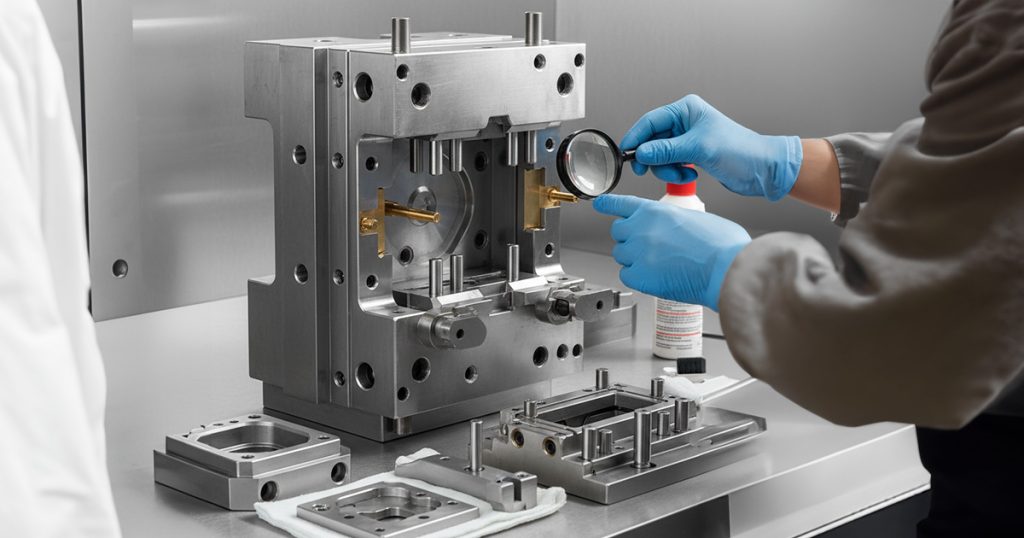
A injection molds manufacturing process is only as reliable as its final testing phase. We implement a rigorous validation protocol to ensure every mold meets the highest industrial standards:
T0 Trial & Mechanical Evaluation: The inaugural injection cycle used to verify the mold’s mechanical integrity, optimizing cooling efficiency, ejection systems, and material flow to prevent future defects.
Precision Dimensional Analysis: A comprehensive verification of the part’s geometry against the original blueprint. Utilizing Coordinate Measuring Machines (CMM), we guarantee that every critical tolerance is strictly met.
Statistical Capability Study ($C_p$ & $C_{pk}$): We go beyond simple measurement by analyzing process stability. This statistical study ensures the mold is capable of producing parts within specification in a consistent and repeatable manner.
Production Readiness: This exhaustive phase minimizes scrap rates and operational downtime, ensuring a seamless transition from the tool shop to high-volume manufacturing.
Conclusion
Investing in high-precision injection molds is the smartest decision for long-term projects. Initial precision translates into lower maintenance costs, less material waste, and a final product quality that positions your brand above the competition. At Sumiparts, we don’t just manufacture molds; we build high-engineered assets that drive global industrial productivity.
Learn more...
Want to learn more about our Injection Molds services?
SUMIPARTS is dedicated to serving you. We strive to bring the best solutions directly to you, whenever you need them. Reach out to us via PBX at +601 748 22 13, call us at +57 313 699 13 56, or email us at info@sumiparts.us. Our team is eager to provide the support you deserve.



 English
  Español de Colombia